
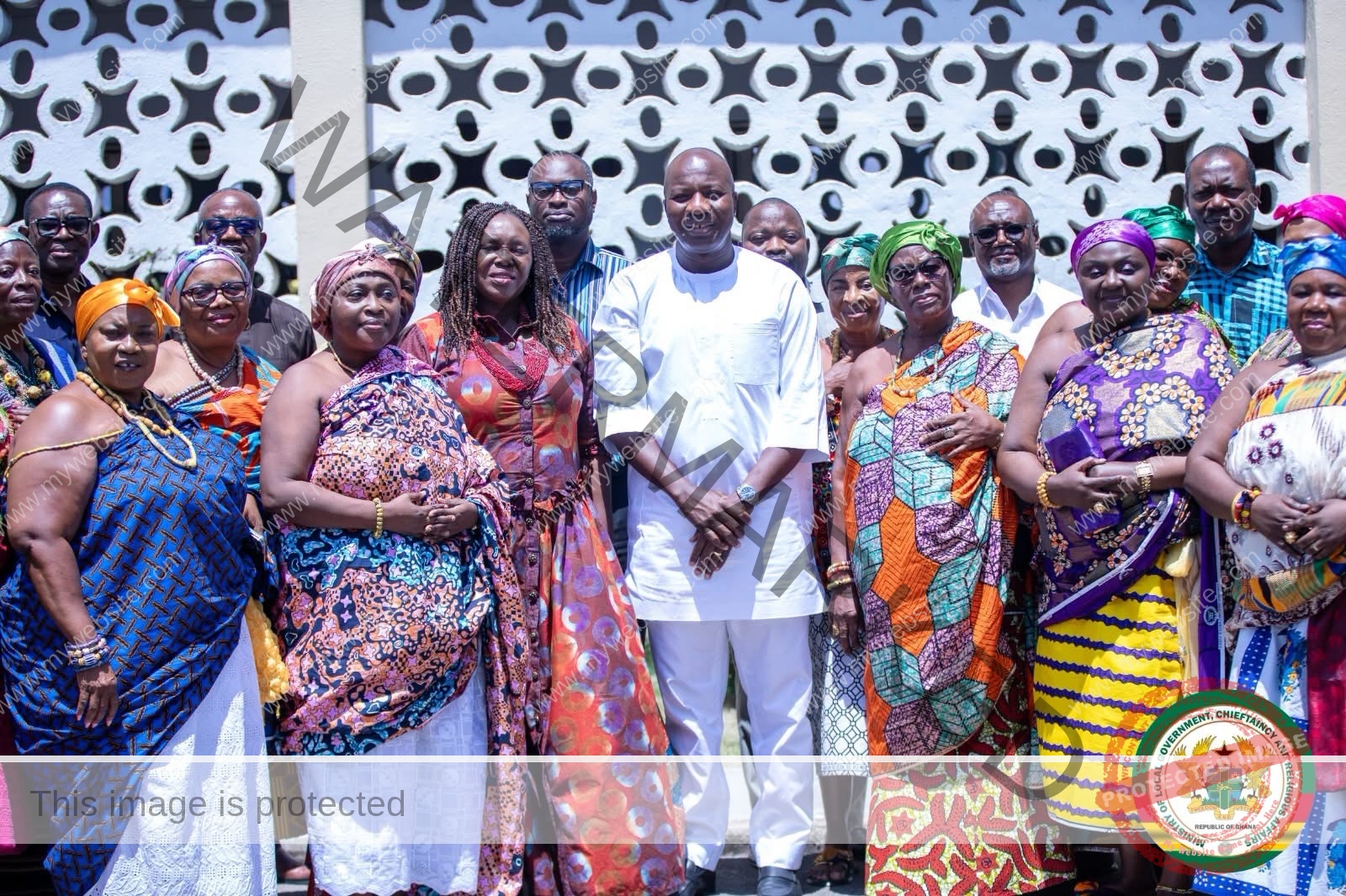
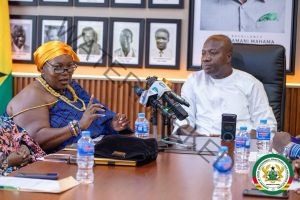
The Minister for Local Government, Chieftaincy and Religious Affairs, Hon. Mahama Ayariga, has held a crucial engagement with the leadership of the National Queen Mothers’ Platform–Ghana over their long-standing exclusion from traditional governance and decision-making, as calls intensify for the establishment of a Chamber of Queen Mothers.
The meeting, held at the Ministry in Accra on Friday, October 16, 2026, follows persistent complaints by Queen Mothers across the country about intimidation, marginalization and being barred from performing their legitimate traditional and developmental roles in their communities.
The engagement comes amid renewed calls for greater recognition and participation of Queen Mothers in traditional governance and decision-making processes affecting their communities.
The National Queen Mothers’ Platform–Ghana has previously called for stronger protection of the traditional roles of Queen Mothers, citing concerns about their exclusion from key decisions, alleged intimidation and undue restrictions in the discharge of their traditional and developmental responsibilities.
According to the Platform, despite their critical role in community development, succession, family cohesion and social welfare, Queen Mothers continue to be sidelined in many traditional councils and decision-making spaces.
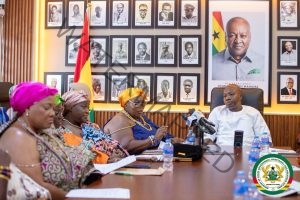
The Platform has also called for renewed efforts to address longstanding chieftaincy disputes, noting that unresolved conflicts in some traditional areas continue to affect peace, unity and community development.
Key among the issues under discussion is the proposed establishment of a Chamber of Queen Mothers as part of the broader national conversation on strengthening the participation of Queen Mothers in Ghana’s governance and traditional institutions.
The Ministry recognises the importance of constructive engagement with traditional authorities and relevant stakeholders in advancing effective chieftaincy administration, peaceful coexistence and inclusive local governance.
Hon. Ayariga assured the Queen Mothers of government’s commitment to inclusive dialogue and promised to work closely with the National House of Chiefs, the Ministry, and other stakeholders to address their concerns.
The engagement underscores the need for continued dialogue and collaboration among government, traditional authorities and other stakeholders to strengthen traditional institutions and enhance their contribution to community and national development.
By Sampson Kumah Ifeetwube Elvis
About The Author
