
Building public trust in democratic institutions requires more than exposing corruption; it demands effective investigations, enforcement of laws, recovery of stolen public funds, and active citizen participation, speakers emphasized at the Public Forum and Closing Ceremony of the 8th Next Generation Investigative Journalism Fellowship.
The event brought together media practitioners, anti-corruption advocates, governance experts, and public officials to discuss the theme of rebuilding public trust through accountability, transparency, and investigative journalism.
Delivering the keynote address, Commissioner of the Commission on Human Rights and Administrative Justice (CHRAJ), Dr. Joseph Akanjolenur Whittal, said citizens are more likely to trust public institutions when allegations of corruption are thoroughly investigated, offenders are held accountable, and misappropriated resources are recovered.
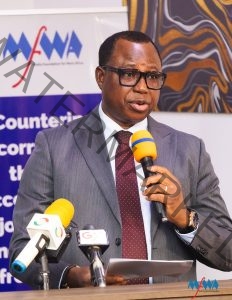
He urged Ghanaians to report corruption to the appropriate authorities, demand transparency from public officials and institutions, participate in local governance processes, support investigative journalism, reject vote-buying, and refuse to pay bribes.
Dr. Whittal also challenged the media to look beyond headline-grabbing scandals and devote greater attention to systemic forms of corruption, including procurement irregularities, conflicts of interest, abuse of public office, embezzlement, misappropriation of public funds, state capture, and illicit enrichment.
“Investigative journalism must follow corruption cases from allegation to conclusion,” he said. “Journalists should build expertise in financial and procurement reporting, use data-driven approaches to scrutinise public expenditure, and collaborate with civil society organisations and accountability institutions.”
In his welcome remarks, Sulemana Braimah, Executive Director of the Media Foundation for West Africa (MFWA), described corruption and declining public trust as twin challenges confronting Ghana’s democracy.
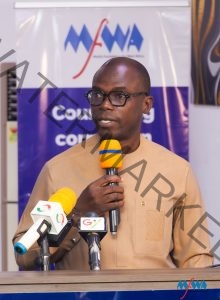
“Trust is the cornerstone of any functioning democracy,” he said. “It grants legitimacy to our institutions, fosters confidence among citizens, and breathes life into accountability efforts.”
Mr. Braimah noted that while journalism plays a crucial role in exposing wrongdoing, accountability ultimately depends on responsive institutions, ethical leadership, and engaged citizens.
“Journalism alone cannot solve the problem,” he said. “Exposing corruption is only part of the solution. Accountability requires institutions that act, leaders who demonstrate integrity, and citizens who remain committed to demanding change.”
He highlighted the MFWA’s efforts to strengthen accountability journalism through initiatives such as The Fourth Estate and the Next Generation Investigative Journalism Fellowship, which support journalists in investigating abuses of power and promote transparency in governance.
Also speaking at the event, Kweku Lartey Obeng, Component Manager of the PAIReD Programme, said corruption undermines not only public finances but also citizens’ confidence in governance systems.
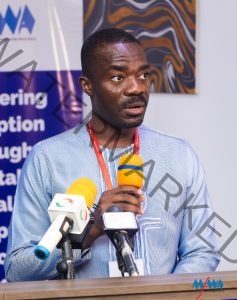
“Rebuilding trust begins with making people feel that the system sees them, hears them, and will act on their behalf,” he said.
Mr. Obeng described investigative journalism as a vital link between hidden wrongdoing and public awareness, adding that the media’s role extends beyond exposing corruption to shaping public discourse and equipping citizens with evidence to hold leaders accountable.
Addressing the fellowship graduates, he encouraged them to uphold the highest standards of integrity and professionalism.
“Every investigation you pursue, and every story you tell with rigour, strengthens the foundation of public trust that this forum seeks to rebuild,” he said. “You are part of the next generation of democracy’s guardians.”
For his part, Dr. Imurana Mohammed, Director of Programmes at the National Commission for Civic Education (NCCE), underscored the central role of trust in democratic governance and social cohesion.
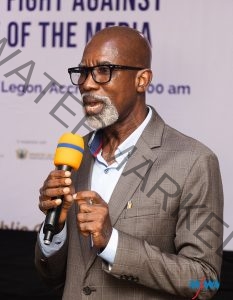
“In a democracy, there are two strands of trust: trust as a democratic value and trust as social capital,” he said. “We build social solidarity through trust.”
He described trust not as a static achievement but as an enduring responsibility.
“Trust is not a monument that we stand before and salute; it is a perpetual flame that must be continuously nurtured,” he added.
Meanwhile, Mary Addah, Executive Director of Transparency International Ghana (TI-Ghana), called on citizens to move beyond expressions of concern and take concrete action against corruption.
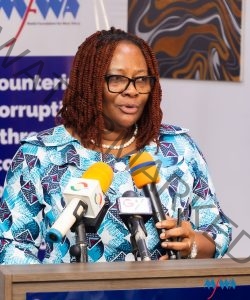
“Let us not sit aloof and watch others destroy Ghana,” she said. “We must continue to explore and embrace innovative ways of fighting corruption.”
She urged citizens to actively engage in anti-corruption efforts, take principled stands against wrongdoing, and encourage others to do the same.
The forum formed part of the closing activities for the 8th Next Generation Investigative Journalism Fellowship, a programme designed to equip young journalists with the skills and knowledge required to produce impactful accountability and investigative reporting.
By Sampson Kumah Ifeetwube Elvis
About The Author
