
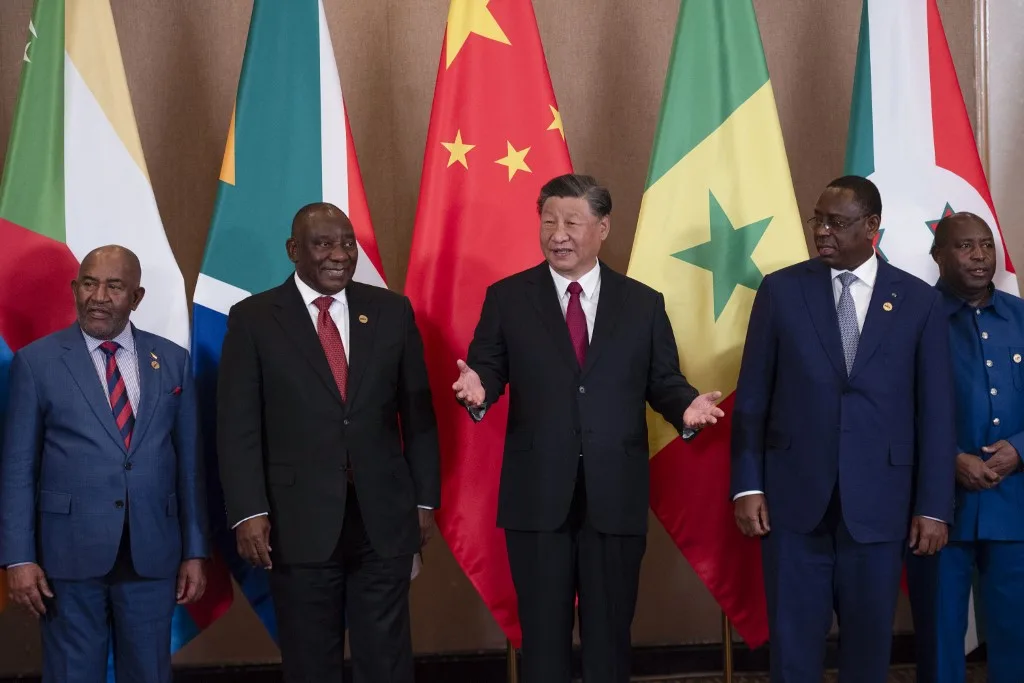
Over the past two decades, China-Africa relations have emerged as one of the most influential dynamics reshaping the African continent’s development landscape.
What began as a series of diplomatic overtures has evolved into a comprehensive partnership encompassing trade, investment, infrastructure development, and cultural exchange.
While this engagement has undeniably spurred economic growth and modernization, it also brings growing concerns around debt sustainability, governance, and environmental impact.
Trade Ties That Bind
China is now Sub-Saharan Africa’s largest bilateral trading partner, with trade volume reaching a record $282 billion in 2023, according to the International Monetary Fund.
Around 20% of the region’s exports are now destined for China, while 16% of imports flow from Chinese manufacturers.
Africa largely exports raw materials such as oil, copper, and cobalt, while importing machinery, electronics, and textiles.
Investment Surge and Strategic Interests
China’s foreign direct investment (FDI) in Africa has seen a steady rise, peaking at $5 billion in 2022.
Much of this capital is directed toward infrastructure, mining, and energy sectors, aligning closely with China’s strategic needs for natural resources and global market access.
While this FDI has created jobs and improved services, critics note that Chinese firms often prioritize their labor and materials, limiting the benefits for local economies.
The Infrastructure Revolution: Roads, Rails, and Ports
Perhaps the most visible symbol of China’s presence in Africa is the extensive infrastructure development under the Belt and Road Initiative (BRI).
Massive projects—ranging from highways in Kenya and ports in Djibouti to railways in Nigeria—have enhanced regional connectivity and trade capacity.
These projects often come with low-interest loans, but they also contribute to rising debt burdens.
Mining and Resource Extraction: Opportunity or Exploitation?
Chinese companies have ramped up mining operations across Central and Southern Africa, drawn by rich reserves of cobalt, lithium, and rare earth metals essential for green technologies.
While these ventures drive economic activity, they often raise environmental red flags and spark debates over resource sovereignty, with some likening the dynamic to a modern form of extractive neo-colonialism.
Aid, Loans, and the Debt Debate
China has become a key financier of African development through a mix of loans, grants, and concessional funding.
These resources have financed crucial sectors, but not without controversy.
Debt sustainability remains a looming concern, with fears of “debt traps” emerging as some countries struggle to meet repayment obligations.
For instance, strategic assets like ports and railways risk falling under foreign control in cases of default.
Beyond Economics: Knowledge, Culture, and Technology
The China-Africa relationship also extends into education, technology transfer, and cultural exchange.
Thousands of African students now study in Chinese universities, while Chinese tech companies provide affordable digital infrastructure.
Additionally, collaborations in film, tourism, and media are deepening cultural ties, promoting mutual understanding beyond economics.
The Double-Edged Sword of Engagement
While the China-Africa partnership has boosted growth, connectivity, and modernization, it is not without its challenges and critics:
- Debt Sustainability: Mounting loans raise fears of unsustainable debt and loss of sovereignty.
- Transparency and Governance: Critics point to opaque contract terms and weak regulatory oversight.
- Environmental Impact: Large-scale infrastructure and mining projects often bypass environmental protections.
- Economic Dependency: Heavy reliance on raw material exports and Chinese imports may hinder industrial diversification.
Looking Ahead: A Future of Mutual Benefit or Growing Imbalance?
China-Africa relations are at a critical juncture.
With immense potential to drive inclusive development, this partnership must evolve to become more transparent, sustainable, and equitable.
For African nations, the challenge lies in negotiating better terms, strengthening institutions, and diversifying their economies.
For China, sustaining goodwill will require a shift from extraction to empowerment.
As the world watches, the China-Africa relationship will remain a defining force in global geopolitics and economic rebalancing in the 21st century.
About The Author
