
By: Sampson Kumah Ifeetwube Elvis
The harmful practice of accusing individuals, often vulnerable women, children, or the elderly, of witchcraft has long undermined human rights in Ghana.
These accusations, driven by deep-rooted cultural beliefs, have led to severe violations, including physical and emotional abuse, banishment, and even murder.
The role of witch doctors and witch-finders, who perpetuate these accusations, exacerbates the problem, fueling violence and social harm.
The African Context of Witchcraft Beliefs
Witchcraft in many African communities, including Ghana, refers to various beliefs and practices.
These beliefs significantly shape social dynamics and influence how communities address challenges and seek spiritual guidance.
While witchcraft is deeply ingrained in the cultures of Sub-Saharan Africa, its meaning and practices can vary widely.
Misunderstandings between African and Western perspectives on witchcraft often arise, as Western scholars tend to interpret African beliefs through a European lens, which can lead to distorted interpretations and misconceptions.
Many of the misunderstandings between Africans and Europeans regarding witchcraft stem from the contrasting ways in which both groups conceptualized the supernatural and the spiritual world.
While Africans often viewed witchcraft as a complex and multifaceted force interwoven with healing, social control, and spiritual connection, Europeans typically perceived witchcraft through a more binary lens of good versus evil, often associated with fear and persecution.
This cultural clash contributed to the stigmatization and misunderstanding of African spiritual practices and led to the harmful label of “witchcraft” being applied in ways that misrepresented their true significance in African societies.
In Ghana, witchcraft is not only a cultural belief but a social reality that continues to impact people’s lives daily.
From region to region, perceptions of witchcraft can differ, but the common thread is that accusations are taken seriously and can lead to violence.
This is especially true when rumors spread about individuals practicing witchcraft.
The Impact of Witchcraft Accusations
In Ghana, accusations of witchcraft often lead to tragic consequences.
Many of those accused—particularly women—suffer violence, public humiliation, and even death.
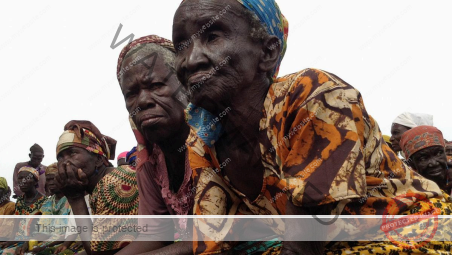
The fear and suspicion surrounding witchcraft have led to the establishment of so-called “witch camps,” where those accused are sent to live in isolation.
These camps, often overcrowded and unsanitary, house vulnerable individuals, mostly elderly women, who are frequently subjected to abuse and mistreatment.
The case of Akua Denteh, a 90-year-old woman who was lynched in 2020 after being accused of witchcraft in the East Gonja Municipality, sparked national outrage and highlighted the urgent need for legal reform.
This horrific event catalyzed the push for the Criminal Offences (Amendment) Bill, 2022, which was passed by the Ghanaian Parliament to criminalize the practice of accusing individuals of witchcraft.
The Criminal Offences (Amendment) Bill, 2022
The passage of the Criminal Offences (Amendment) Bill marks a significant milestone in Ghana’s fight against human rights abuses related to witchcraft accusations.
The bill explicitly criminalizes the act of naming or labeling someone as a witch, as well as the practices of witch doctors and witch-finders who perpetuate these accusations.
The bill was introduced by Francis-Xavier Sosu, the Member of Parliament for Madina, and co-sponsored by several other MPs.
It garnered unanimous support in Parliament, with all participating members calling for the criminalization of witchcraft accusations and the abolition of witch camps.
The objective is clear: to deter witchcraft accusations and their associated human rights violations while providing a legal framework for law enforcement to prosecute offenders.
The bill also aligns with Ghana’s international human rights obligations, including the Universal Declaration of Human Rights, which calls for the protection of individuals’ dignity, freedom, and equality.
The legislation seeks to safeguard those most vulnerable to witchcraft accusations—often elderly women, some of whom may suffer from conditions such as dementia, making them easy targets for exploitation.
The Importance of Legal Reform
The introduction of the bill is a direct response to the human rights abuses that have taken place in witch camps across Ghana.
According to reports from the Ghanaian Parliament, in 2021, there were 539 inmates in five prominent witch camps. The appalling conditions in these camps further highlight the urgent need for public policy interventions.
The reports also emphasized that witchcraft accusations contradict the fundamental principles of human dignity and equality enshrined in both the Universal Declaration of Human Rights and the Constitution of the Republic of Ghana.
The Constitution prohibits practices that dehumanize or harm individuals, particularly in ways that violate their physical and mental well-being.
Moving Forward: A Call for Accountability
The passage of the Criminal Offences (Amendment) Bill is a crucial step in addressing the human rights violations that have resulted from witchcraft accusations.
By criminalizing the practice and providing legal tools for law enforcement, Ghana is taking an important step toward protecting vulnerable individuals and ensuring that such accusations no longer lead to violence, torture, or banishment.
This legal framework also aligns with Ghana’s obligations under international human rights treaties, including the Convention against Torture and Other Cruel, Inhuman, or Degrading Treatment or Punishment and the Convention on the Elimination of All Forms of Discrimination Against Women.
The bill aims to address the human rights deficiencies highlighted in the 2022 Country Reports on Human Rights Practices, which recorded witchcraft accusations and their related abuses as a significant issue.
Conclusion
While the cultural beliefs surrounding witchcraft in Ghana and many parts of Africa are complex and varied, the need to protect vulnerable individuals from the harmful consequences of such accusations is clear.
The Criminal Offences (Amendment) Bill 2022 https://chraj.gov.gh/wp-content/uploads/2023/08/Criminal-offence-Bill-new.pdf represents a bold step toward ensuring that human dignity is upheld and that justice is served for those who have been unjustly accused.
By criminalizing witchcraft accusations, Ghana is taking a stand against a practice that has led to countless human rights violations, sending a message that no one should suffer because of unfounded accusations based on superstition or fear.
About The Author
