
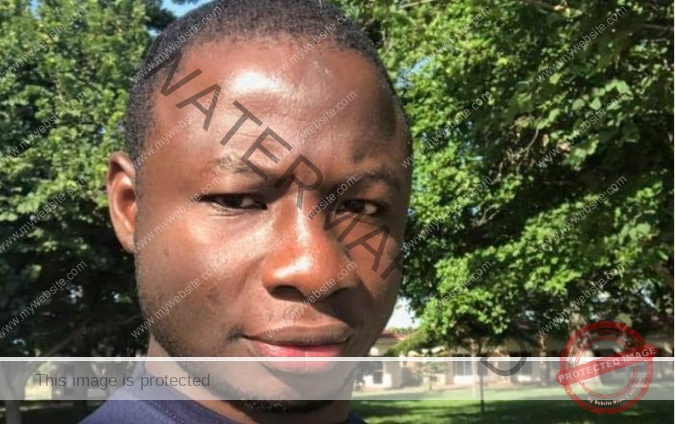
The Managing Director of ISPY Company, Daniel Owusu Koranteng, has been remanded in custody by the Madina Magistrates’ Court as a suspect in the murder of undercover journalist Ahmed Suale.
The defense counsel, Mr. Kofi Essel representing Mr. Koranteng requested that his client be granted bail, arguing that the prosecution’s case lacked substantial evidence to justify the charges levied against him.
The charges stem from the ongoing investigation into the 2019 murder of investigative journalist Ahmed Suale, whose tragic death sparked a national outcry and renewed discussions about press freedom and the safety of journalists in Ghana.
Magistrate Suzzy Nyakotey, presiding over the case at the Accra Magistrate Court, considered the request for bail but ultimately adjourned the proceedings until April 1, 2025.
The adjournment was granted to allow authorities to conduct further investigations, as new developments in the case continue to emerge.
The court emphasized that a thorough review of all evidence would be necessary before any decisions regarding bail could be made.
During the hearing, a pivotal legal question was raised: can the sale of photographs alone serve as a sufficient basis to charge an individual with murder?
This query underscores the complexity of the case, which has attracted significant public and media attention.
Legal experts suggest that while the sale of photographs related to Mr. Suale’s investigative work may be part of the broader narrative surrounding his death, proving a direct link between the photographs and the murder will be a critical challenge for the prosecution.
Mr. Koranteng’s defense team has argued that there is no solid evidence to tie him directly to the crime and that the mere involvement in the sale of photographs does not establish criminal intent or complicity in murder.
The defense further contends that the prosecution’s case is built on circumstantial evidence that is insufficient to support the charges of murder.
The arrest of Mr. Koranteng marks a significant development in the investigation into Suale’s murder.
Authorities are hopeful that Koranteng’s arrest will lead to further breakthroughs in the case, which has remained unsolved for over five years.
As the investigation progresses, law enforcement officials continue to examine potential links between Koranteng and other individuals who may have played a role in orchestrating the attack on Suale.
Ahmed Suale, a journalist with the Tiger Eye investigative team, was shot dead in cold blood in January 2019 while he was in his car in Madina, a suburb of Accra. Suale had been a key figure in undercover investigations exposing corruption within Ghanaian football and government institutions.
His murder prompted widespread condemnation, with many calling for swift justice.
As the case unfolds, it remains to be seen whether Mr. Koranteng’s involvement in the murder will be proven in court.
For now, the focus remains on the ongoing investigations and the pursuit of justice for Suale’s family and the wider journalistic community.
Background Context
The killing of Ahmed Suale remains one of the most high-profile and controversial cases in Ghana’s recent history. It brought to the forefront issues related to press freedom, journalist safety, and the fight against corruption in the country. Suale’s investigative work, particularly his role in exposing corruption in the Ghana Football Association through the Number 12 exposé, had made him a target for certain powerful figures.
The investigation into Suale’s murder has been slow, with initial leads proving to be either inconclusive or leading to dead ends. Koranteng’s recent arrest, however, has reinvigorated hopes that justice may still be served. The case has garnered significant media attention, both locally and internationally, with rights groups and journalists calling for a fair trial and accountability for those responsible for Suale’s death.
The court’s decision to adjourn the case and allow more time for investigations reflects the complexity and sensitivity of the matter at hand. It also highlights the challenges of prosecuting cases based on circumstantial evidence, especially when dealing with high-profile figures and sensitive issues such as freedom of the press.
About The Author
