
Imagine being rushed to the hospital in desperate need of care, only to be told, “No bed, no treatment.”
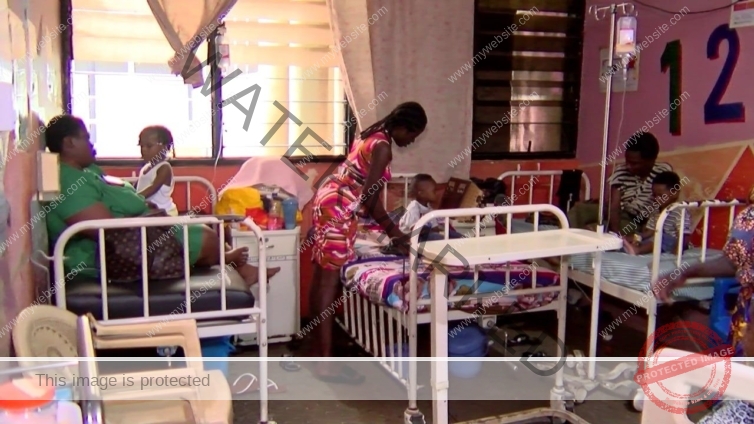
This harsh reality faces many patients at Tafo Government Hospital in the Ashanti region, where a severe shortage of beds forces people onto hard floors and into narrow hallways.
Once a promising facility, the hospital is now overwhelmed, with patients forced to fight for space before they can even begin to fight for their health.
The hospital, which serves the Tafo municipality, has reached a breaking point, where congestion causes widespread suffering and diminishes the quality of care.
An Overcrowded and Underfunded Hospital
The hospital’s wards are overflowing, with patients spilling out into the corridors.
Many patients are forced to lie on makeshift beds, while others sit or stand, waiting for medical attention.
The overcrowding is worsened by the absence of a functioning maternity block, a major infrastructural failure that has plagued the hospital for decades.
Narrow, crowded hallways are filled with patients, relatives, and medical staff, all struggling for space.
Entering the hospital, the sounds of distress are evident. Some patients, gravely ill, are forced to wait for hours in an overstretched system.
A nurse, in charge of the neonatal unit, expressed the difficulty of working in such conditions: “It is extremely difficult to provide proper care in these circumstances.”
A Legacy of Neglect
This situation is not new, but it has worsened in recent years. The hospital’s patient population has surged, while its infrastructure has remained stagnant.
Dr. Eric Kwame Dito, the hospital’s medical superintendent, expressed his frustration with the outdated facilities: “Tafo Government Hospital is very old. If you ask me, I wouldn’t even call it a hospital. We must do something about this.”
Dr. Dito added that overcrowding often forces staff to turn patients away because there are not enough beds.
“We cannot admit all the patients who come to us. Sometimes, we simply have to send them back,” he stated.
A Maternity Block Left to Decay
One of the most glaring issues is the unfinished maternity block, a project that has been under construction for 23 years with no sign of completion.
Originally meant to provide a safe and comfortable space for expectant mothers, the maternity unit remains incomplete.
“Since 2002, almost 23 years now, the project hasn’t seen completion,” Dr. Dito said.
The lack of a maternity block is a major concern for both medical staff and patients.
The old maternity unit, never designed to handle the growing number of expectant mothers, is now overcrowded and unable to meet modern needs.
Patients Speak Out: A Cry for Help
Frustration and despair are common among patients and their families, who endure the harsh conditions.
One nursing mother shared her experience: “I stood up the whole night. I couldn’t sleep. There’s not enough space on the bed for both my baby and me.”
Another patient described the discomfort of the overcrowded rooms: “The bed is insufficient, and the room is too small for us.”
For many, Tafo Government Hospital is not just a place for treatment but a painful reminder of a healthcare system in disarray.
The 23-year delay in completing the maternity block highlights the systemic failure to address the urgent needs of one of the country’s oldest hospitals.
A Call for Change
The situation at Tafo Government Hospital highlights the neglect faced by many public health institutions in Ghana.
Both patients and healthcare workers are calling for immediate intervention, urging the government and relevant authorities to prioritize infrastructure development and allocate resources to provide the quality care that the hospital’s patients urgently need.
In its current state, Tafo Government Hospital reflects a healthcare system in crisis—a hospital struggling to meet the needs of its people, and a facility in desperate need of reform.
About The Author
