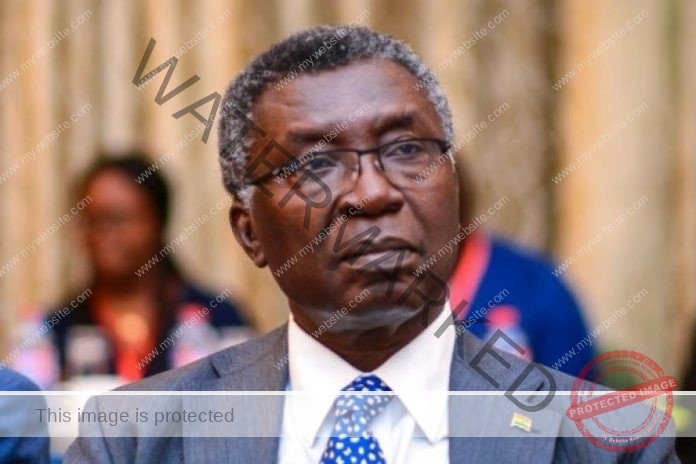
Fourteen years after the death of President John Evans Atta Mills, Ghana has mistaken political programmes for development and abandoned integrity-led governance for impunity, renowned heart surgeon Prof. Kwabena Frimpong-Boateng has said.
Delivering a memorial lecture on the legacy of the late President, Prof. Frimpong-Boateng said Prof. Mills coined the “Better Ghana Agenda” in 2007 not as a claim that Ghana would become good overnight, but as a direction of travel to progressively fix deficits in the economy, employment, environment, health, education, agriculture and public discipline.
THE BETTER GHANA RECORD
In the three and a half years the agenda was implemented, Prof. Frimpong-Boateng noted, the gains were appreciable and measurable.
He cited strong economic growth and significant reduction in the budget deficit, single-digit inflation, elimination of schools under trees, expansion of universal healthcare coverage, and Ghana’s attainment of Lower Middle-Income status in 2010 after GDP rebasing.
Other milestones included cocoa production hitting one million metric tonnes for the first time, and on December 15, 2010, President Mills commissioning First Oil from the Jubilee Field, marking Ghana’s entry into oil production. While discovery was under the Kufuor administration, it was Mills who supervised development to commercial production, he said.
Two specialized universities – the University of Health and Allied Sciences in Volta and the University of Energy and Natural Resources in Brong-Ahafo – were established, alongside a programme to re-equip science resource centres in all districts.
“These were not cosmetic achievements. They were the early yield of purposeful, integrity-led governance,” Prof. Frimpong-Boateng said.
GOVERNANCE AND ACCOUNTABILITY
Prof. Frimpong-Boateng said his most earnest discussions with Prof. Mills centred on corruption and lessons from Singapore under Lee Kuan Yew.
Mills, he said, attempted to do things differently. He cut ministers from 87 to 73, a 16% reduction with projected annual savings of $4 million, eliminated hundreds of Special Assistants and spokespersons, and inaugurated the Constitution Review Commission on January 11, 2010 chaired by Prof. Albert Fiadjoe.
He added that Mills demonstrated accountability by action: “Barely six months after he was sworn in, one minister resigned following findings of financial impropriety. Two further ministers tendered their resignations in October 2009 after allegations of accepting bribes from a United Kingdom company surfaced.”
Prof. Frimpong-Boateng contrasted this with what he called Ghana’s drift into impunity, citing the banking sector clean-up where, he said, owners accused of misusing depositors’ funds were arraigned, but later had cases discontinued by the state under a new government, with some receiving appointments and other rewards.
A CONSTITUTION WITHOUT CULTURAL ROOTS
The former minister argued Ghana’s governance crisis is rooted in a borrowed constitution stripped of its moral foundations.
He said the American presidential system Ghana copied is built on a biblical understanding of human fallibility, reflected in Isaiah 33:22, which produced checks and balances. Ghana’s 4th Republican Constitution, by contrast, makes the President so powerful he influences the judiciary and parliament, with entrenched provisions shielding him after office.
“Our traditional systems endure because they are rooted in beliefs and spirituality. People think carefully before invoking the Great Oath of the Asantehene because there are consequences,” he said.
MISSED OPPORTUNITIES
Prof. Frimpong-Boateng said Ghana’s most consequential missed opportunity was the abandonment of Kwame Nkrumah’s Seven-Year Development Plan (1963-1970) after the 1966 coup. Designed to build self-reliance through CSIR, GAEC and KNUST, the plan could have kept Ghana at par with South Korea and Malaysia, he argued.
He also cited the “Kofi Annan Moment.” For nine years a Ghanaian led the UN, but Ghana never leveraged it for industrial transformation through UNIDO. Its first real industrial partnership with UNIDO was only in 2019, thirteen years after Annan left office.
He lamented that despite having the George Grant University of Mines and Technology at Tarkwa, Ghana promotes galamsey instead of building a sustainable mining industry with its own graduates.
THE POVERTY GAP IS A TECHNOLOGY GAP
The core agreement between him and Mills in 2001, he said, was that underdevelopment is a technology gap, not a resource gap.
Africa, with 20.4% of Earth’s land and 16% of world population, contributes less than 1% to world trade, with the bottom 25 countries on the Human Development Index all in Africa. Ghana spends $4 billion recruiting 100,000 foreign experts while 250,000 qualified Africans leave.
He pointed to South Korea and China as lessons. South Korea moved from $87 per capita GNP in 1961 to the 13th largest economy, with Samsung alone generating $240 billion annually. China, after four scientists wrote to Deng Xiaoping in 1986, launched the 863 Programme committing to biotechnology, space, IT, laser, automation and energy.
“No country has ever developed without the capacity to produce the machines and spare parts needed to power its own economy,” he said.
SHORT-TERMISM AND ABDICATION
Prof. Frimpong-Boateng criticized successive governments for measuring success by infrastructure alone while launching politically branded programmes that die with administrations.
“Planting for Food and Jobs reached over 1.2 million farmers between 2017 and 2022, yet by 2025 virtually nothing remained. One District One Factory, Agenda 111, the 24-Hour Economy, and Nkokɔ Nketenkete are cut from the same cloth,” he said.
More troubling, he said, is abdication of state responsibility. Universities are starved and forced to rely on fees, shutting out poor students. CSIR and GAEC are told to commercialize to survive, unlike in Korea or Singapore where research is generously funded. The Environmental Protection Agency, left to fund itself, has been reduced to issuing permits for revenue while galamsey destroys rivers.
“A government that cannot fund its universities, its scientists and its environmental regulators has not found a clever way to save money. It has found a certain way to destroy its country’s future,” he said.
THE DAILY BURDEN
He said headline macro indicators do not reflect lived reality. Ghana’s housing deficit is 1.8 to 2 million units, with only 33% of annual need met. Over 60% live in informal settlements. Food insecurity affected 13.3 million Ghanaians in 2024, with 52% in Volta and 29% in Greater Accra. Transport consumes up to 22% of monthly salaries, with average commutes in Accra exceeding 110 minutes for just 3.28km.
Electricity tariffs rose 142% between 2020 and 2025, while charcoal is up 52% year-on-year. The Gini coefficient stands at 43.5, above the global median of 35.9.
He proposed specific targets: workers in Greater Accra able to reach home within one hour, 45 minutes in Kumasi, and 30 minutes in Tamale, Sekondi-Takoradi, Wa, Ho and Cape Coast, through functional traffic lights, enforced regulation, bicycle lanes, reliable intra-city buses, light rail and a national railway.
For housing, he called for a National Affordable Housing Fund, mortgage reform and a mandatory rent code capping advance rent at three months. For food, a National Food Assistance Programme, post-harvest infrastructure, support for smallholder farmers, especially women, and price monitoring.
WHAT GHANA OWES MILLS
Prof. Frimpong-Boateng concluded that Ghana needs deliberate, sustained choices beyond electoral cycles: investment in science and technology across generations, an industrial policy built on knowledge not extraction, investment in human capital, rule of law and zero tolerance for corruption.
“Professor Mills understood that leadership is not about power. It is about service. It is about the worker who needs to get home in under two hours, the child who needs heart surgery regardless of whose name is invoked, the scientist who returns and deserves to be told to go back to Korle Bu and do what he knows best.”
“What we owe him is not monuments, but the courage to govern with integrity, to lead with humility, to plan for the future rather than the next election, and to place the welfare of ordinary Ghanaians above the interests of those in power.”
By Sampson Kumah Ifeetwube Elvis
About The Author
