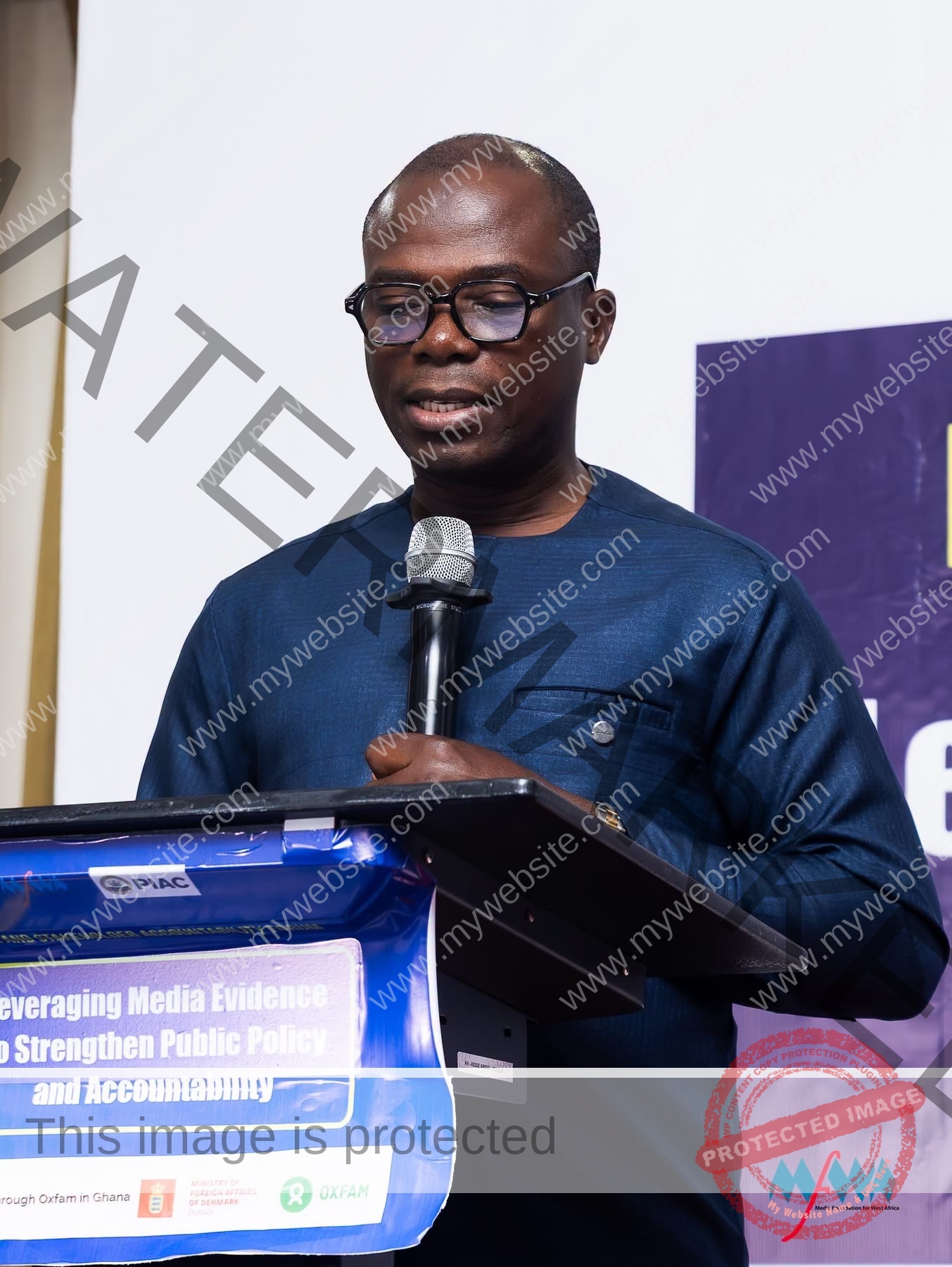
The Executive Director of the Media Foundation for West Africa (MFWA), Sulemana Braimah, has underscored that while journalists play a critical role in exposing wrongdoing, the ultimate authority to investigate, recover public funds, sanction wrongdoers or reform policies lies with public institutions.
Mr. Braimah made the observation while delivering his welcome address at the Media and Stakeholders Accountability Forum, dubbed “Leveraging Public Media Evidence to Strengthen Public Policy and Accountability, held in **Accra on Wednesday, October 21.
The forum, convened by the MFWA, brought together journalists, editors, civil society actors, development partners, representatives of state accountability institutions, and policymakers to explore practical mechanisms for ensuring that credible media investigations translate into tangible accountability outcomes and policy reforms.
According to Mr. Braimah, every day in Ghana, journalists report serious problems – from communities without potable drinking water, abandoned government projects, questionable public expenditure, to alleged acts of corruption.
He noted that while some of these stories generate considerable public outrage, dominate public discourse and provoke responses from public officials, the headlines often disappear after a few days and the problems remain unresolved.
“Children we see studying under trees continue to study under trees, communities without safe water remain without it, and abandoned projects remain abandoned even after millions of cedis have been spent,” he lamented.
The MFWA boss stressed that journalism, beyond its traditional watchdog role, generates valuable evidence that can help governments identify problems, address policy failures and make better decisions.
He cited instances where investigative journalists have examined procurement records and visited project sites where official records indicate projects have been completed, only to find nothing on the ground.
“The aim is not to embarrass government, but to help government to do better, and to help public institutions to do better,” he said.
Mr. Braimah however observed that too often, such accountability journalism is treated merely as news to be consumed, debated and forgotten, rather than as evidence deserving serious institutional consideration.
He emphasized the point that has become a key takeaway of the forum: “Journalists can expose wrongdoing, but the authority to investigate, recover public funds, sanction wrongdoing or reform policies largely rests with public institutions.”
He explained that the MFWA, through its fact-checking and investigative projects, has demonstrated how journalism can contribute to public accountability, but said publication alone does not guarantee change.
“We must therefore ensure that credible media evidence does not become something stranded between exposure and inaction. Showing that media revelations translate into public accountability requires stronger engagement among media, public institutions and civil society,” he said.
Mr. Braimah also called for responsibility on the part of journalists to ensure that evidence is credible, verified and fairly presented, and urged public institutions to see credible media investigations not as acts of hostility, but as opportunities to correct mistakes and improve performance.
Addressing political loyalists who defend every wrongdoing of government, he stated emphatically: “A government does not become weaker because journalists expose problems under its watch. Indeed, governance becomes weaker when those problems are ignored or allowed to continue.”
He expressed hope that the forum will identify practical mechanisms through which media evidence can inform policy decisions and trigger meaningful institutional responses, and help build a system in which credible media investigations will always mark the beginning of accountability and change.
The one-day forum is expected to produce recommendations on bridging the gap between media exposés and institutional accountability in Ghana.
By Sampson Kumah Ifeetwube Elvis
About The Author
