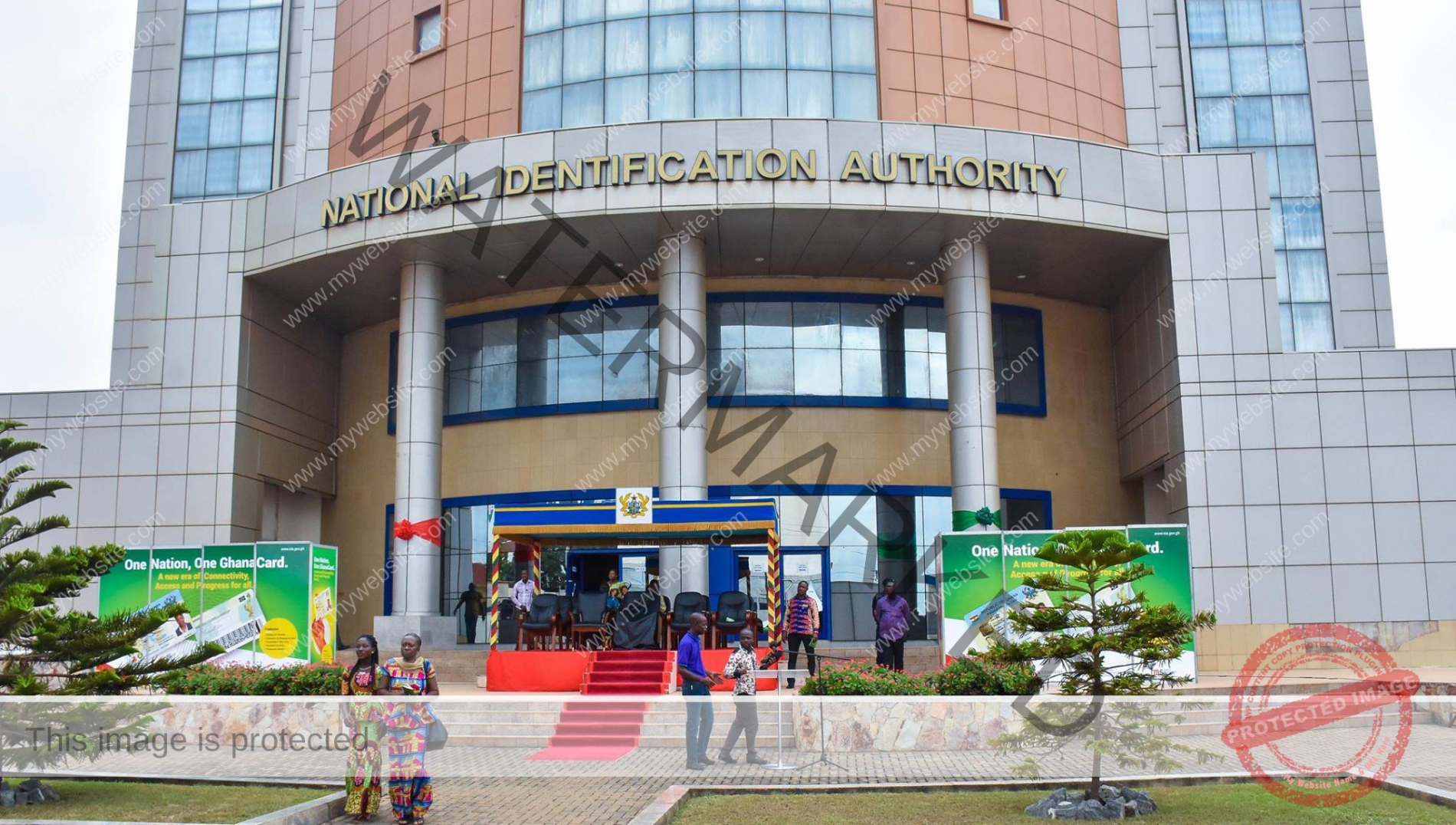
The (NIA) Biometric Verification Taskforce will begin a nationwide crackdown on institutions that fail to comply with the National Identity Register (Amendment) Regulations, 2026 (L.I. 2523).
The enforcement, effective 2nd November, 2026, means all institutions have 18 days to comply or face sanctions.
According to the NIA, all institutions that verify identities MUST:
**Stop ocular inspection and photocopying of the Ghana Card, and onboard onto the NIA Identity Verification System Platform (IVSP) for secure biometric verification.
Background: Why The Crackdown
The directive is backed by the National Identity Register (Amendment) Regulations, 2026 (L.I. 2523), which makes it mandatory for all institutions that rely on the Ghana Card for identity verification to use the NIA’s secure biometric verification platform.
For years, many institutions – including banks, telecom companies, hotels, hospitals, and public agencies – have relied on merely looking at the Ghana Card (ocular inspection) or making photocopies as proof of identity. The NIA says this practice is insecure, prone to fraud, identity theft, and impersonation.
Under L.I. 2523, ocular inspection is no longer acceptable as a means of identity verification. Photocopying the card without biometric verification is also prohibited.
The IVSP allows institutions to instantly verify a person biometrically – using fingerprints or facial recognition – against the National Identity Register, ensuring the person presenting the card is the true owner.

Ghana Card Remains Sole Mandatory ID
Since 2017, the Ghana Card has become the single mandatory national identification document for all transactions in Ghana, including banking, SIM registration, passport acquisition, SSNIT, NHIS and voter registration.
The NIA has consistently warned that the card contains security features that cannot be authenticated by mere visual inspection, hence the need for electronic verification.
The Authority embarked on a nationwide sensitization exercise earlier this year urging institutions to onboard onto the IVSP at a minimal fee. However, compliance has remained low.
What Happens After November 2
The Biometric Verification Taskforce, which comprises NIA officials and security personnel, will from November 2 begin visiting institutions across the country.
Non-compliant institutions risk fines, suspension of operations, publication of their names, and other sanctions as prescribed under L.I. 2523.
The NIA has therefore urged all banks, savings and loans companies, microfinance institutions, insurance firms, telecommunication companies, fintechs, public institutions, private businesses, schools and other entities that rely on the Ghana Card to urgently contact the NIA and onboard onto the IVSP platform before the deadline elapses.
The Authority says the move will protect Ghanaians, protect businesses from fraud, and secure the national identity system.
By Sampson Kumag Ifeetwube Elvis
About The Author
