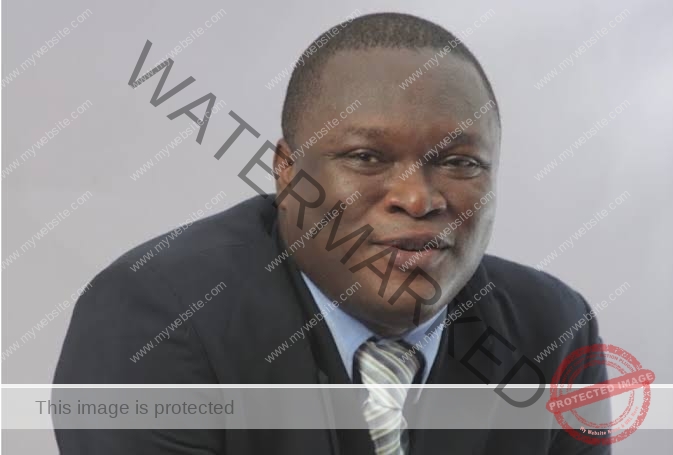
PIAC Chairman Richard Ellimah says Ghana’s failure to hold officials accountable for breaches of the Petroleum Revenue Management Act exposes a persistent gap between transparency and enforcement.
The Chairman of the Public Interest and Accountability Committee (PIAC), Richard Ellimah, has lamented that no public officer has been prosecuted for breaching the Petroleum Revenue Management Act (PRMA) in the 15 years since its enactment, despite repeated findings of violations.
Speaking at a media and stakeholder accountability forum in Accra on Wednesday, October 21, under the theme “Leveraging Media Evidence to Strengthen Public Policy and Accountability,” Mr Ellimah said Ghana had made progress in generating public evidence of wrongdoing but continued to struggle to translate findings into concrete action.
He said reports from Parliament, the Auditor-General, anti-corruption institutions, civil society organisations and the media frequently failed to trigger timely investigations, the recovery of public funds or sustained policy reforms.
“Fifteen years of public statutory reports on the underutilisation of petroleum revenues have produced little or no accountability,” he said, adding that he could not recall a single instance in which a public officer had been held accountable for breaching the law.
“Trust me, there have been many, many breaches of the law over the years,” he added.
Mr Ellimah argued that Ghana’s accountability challenges stemmed not from a lack of laws or institutions but from the failure to ensure that documented wrongdoing resulted in consequences.
He cited the Auditor-General, the Public Accounts Committee, the Public Procurement Authority, internal audit agencies, the Office of the Special Prosecutor, the Economic and Organised Crime Office, and the Right to Information Commission as institutions mandated to promote transparency and accountability.
“Almost every gap that an audit identifies already has an institution whose strategic job it is to act on it,” he said.
“The real question, therefore, is not whether we have the right institutions. It is why having them does not reliably produce the right outcomes.”
More laws, little enforcement
Mr Ellimah criticised successive governments for relying heavily on new legislation and institutions to address corruption and illegal mining without demonstrating the political will to prosecute influential individuals implicated in wrongdoing.
He cited amendments to the Minerals and Mining Act in 2019, which introduced stiffer penalties for illegal mining, commonly known as galamsey.
Despite the amendments, he said, prominent individuals allegedly involved in illegal mining had largely escaped prosecution, while enforcement efforts often focused on young people who were publicly arrested and paraded.
“We cannot keep pointing to the existence of legislation when we have not even taken the basic step of investigating the involvement of politically exposed persons and other prominent members of society in illegal mining,” he said.
He added that successive governments since 2001 had promised to fight corruption but had often responded to the problem by establishing more institutions rather than demonstrating the political commitment needed to enforce existing laws.
Mr Ellimah warned that the proliferation of legislation had not necessarily translated into better outcomes, arguing that corruption appeared increasingly difficult to tackle despite the expansion of the country’s anti-corruption framework.
PIAC’s record shows the value of sustained scrutiny
Using PIAC as an example, Mr Ellimah said independent monitoring, consistent reporting and sustained public scrutiny could improve the management of public resources.
Established under the Petroleum Revenue Management Act, 2011, PIAC is mandated to monitor the management and use of Ghana’s petroleum revenues and report its findings to the public. The committee is also required to undertake independent monitoring of petroleum-funded projects and report its findings to Parliament.
He cited a project visit in which PIAC reportedly found that a structure described as a dam, said to have received about GH¢50,000 in petroleum revenue, was little more than a dugout.
The example, he said, demonstrated why independent verification of government expenditure was necessary to establish whether public funds were being used for their intended purposes.
Mr Ellimah said PIAC had published 29 public reports since its establishment and helped identify and end the practice of oil companies paying state revenue into incorrect accounts.
He added that the committee had worked with the Ghana Revenue Authority to identify tax gaps and recover revenue owed to the state but not collected.
Ghana has earned an estimated US$11.9 billion in petroleum revenue since 2011, he said, stressing the importance of ensuring that citizens could trace how the money was managed and spent.
According to him, consistent and credible public reporting could influence outcomes over time, regardless of which political party was in power.
He said the same approach could strengthen accountability in public procurement, where audit findings on irregular expenditure, questionable contracts and failures to follow competitive tendering procedures should lead to verified corrective action.
PIAC needs stronger enforcement mechanisms
Mr Ellimah acknowledged, however, that PIAC’s mandate to monitor, investigate and report did not give it the power to enforce its recommendations directly.
He described the committee as an institution that repeatedly documented breaches but depended on other authorities to act on its findings.
He said journalists frequently asked what had happened to public officials implicated in violations of the Petroleum Revenue Management Act following the publication of PIAC’s annual reports, but the committee had little to report in terms of prosecutions.
The situation, he argued, exposed the need for stronger mechanisms to ensure that findings and recommendations were followed through to their conclusion.
He also raised concerns about changes to the petroleum revenue management framework, questioning whether amendments had adequately considered the implications for PIAC’s statutory responsibilities and independence.
Mr Ellimah maintained that PIAC remained relevant despite questions about the need for the institution, arguing that its work was particularly important in a country where natural resource revenues required sustained public oversight.
Calls for greater scrutiny of mining law reforms
The PIAC chairman also expressed concern about the limited public consultation surrounding proposed changes to Ghana’s mining legislation.
He described the recent amendment process as one of the most consequential developments in mining law in two decades, yet said media scrutiny had been inadequate and consultations led by the Ministry of Lands and Natural Resources had not sufficiently engaged communities affected by mining.
He warned that limited consultation and the suppression of independent voices could undermine public participation in decisions affecting natural resources and local communities.
Mr Ellimah called for stronger collaboration among the media, civil society and accountability institutions to ensure that evidence of wrongdoing translated into investigations, corrective action and sanctions where necessary.
He stressed that Ghana’s accountability deficit could not be resolved by passing more laws alone, but required institutions to act on their mandates and governments to demonstrate the political will to enforce the law.
The central challenge, he said, was to close the gap between identifying wrongdoing and ensuring that those responsible faced the appropriate consequences.
By Sampson Kumah Ifeetwube Elvis
About The Author
