
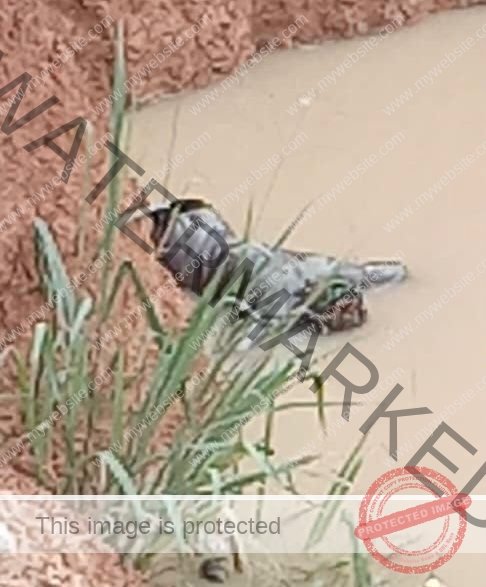
A tragic incident in the Bosomefreho District of the Ashanti Region has claimed the life of a 45-year-old woman, who is believed to have drowned in an abandoned illegal mining pit at Anyaaso.
The victim’s decomposed body was discovered four days after the suspected drowning, partially submerged in mud and debris—highlighting the deadly legacy of unregulated galamsey (illegal mining) activities in the area.
According to local reports, the woman—whose name has not yet been released—was last seen days before her body was found by a group of residents passing near the pit.
The body, already in an advanced state of decomposition, was retrieved and buried on-site due to public health concerns and the difficulty of identification.
The incident has sent shockwaves through the community, with residents expressing fear and frustration over the growing number of abandoned mining pits left unsealed in the area.
They described the pits as “silent death traps,” scattered across farmlands and footpaths used daily by villagers, traders, and schoolchildren.
Community Outcry
“This is not the first time something like this has happened.
We live in constant fear.
These pits are everywhere overgrown with grass, filled with water and mud.
If it’s not a human being falling in, it’s livestock,” said one resident.
Community members are now demanding immediate intervention from local authorities, the Environmental Protection Agency (EPA), and the Minerals Commission to properly secure or reclaim these dangerous sites.
They are also calling for a full investigation into the circumstances surrounding the woman’s death, including whether she fell accidentally or was pushed.
“The loss of this woman is heartbreaking, but it is also preventable.
If the government had taken proper steps to reclaim these galamsey sites, we wouldn’t be mourning today,” said a local assembly member.
A Widespread Problem
The tragedy in Anyaaso underscores a national crisis stemming from the proliferation of illegal mining activities across Ghana.
Hundreds of abandoned pits—often unmarked and unfenced—pose severe risks to lives, property, and the environment.
Despite repeated calls from environmental groups and local leaders, reclamation efforts have been slow and poorly enforced.
Many of these pits fill with rainwater or sludge, becoming both environmental hazards and drowning risks.
In recent years, several similar incidents have been reported in other parts of the Ashanti, Western, and Eastern regions, often involving children or unsuspecting farmers.
Calls for Accountability
Residents are not only calling for the closure of these sites but also for accountability.
Some are demanding that former mining operators be held responsible for the environmental destruction and loss of life linked to abandoned pits.
“There has to be a system where those who benefit from illegal mining are made to clean up the mess they leave behind,” a local teacher said. “People can’t keep dying like this.”
As the Bosomefreho District Assembly begins a preliminary investigation, community leaders are urging swift and sustained action—not only to prevent further tragedies but to restore confidence and safety in communities still grappling with the long-term impacts of illegal mining.
About The Author
