In Accra, the palm kernel business is emerging as a quiet yet powerful source of income, especially for young entrepreneurs seeking sustainable, hands-on work.
Extracted from the seed of the palm fruit, palm kernels are processed into a wide range of valuable products, making this sector one of the most efficient and profitable small-scale industries in Ghana.
The journey begins with the purchase of raw palm kernels.
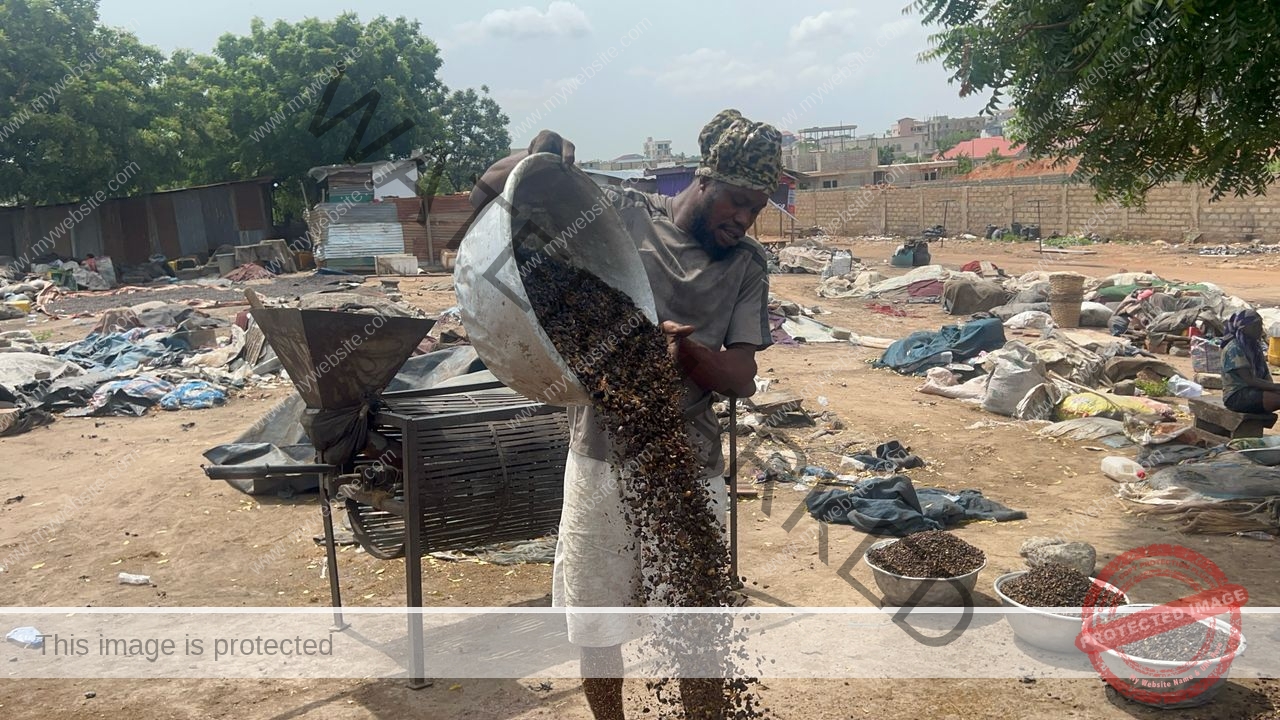
These are cracked using machines to separate the nut from the shell.
The kernels are then dried and processed to extract palm kernel oil, a highly versatile product widely used in soap-making, cooking, cosmetics, and even construction work.
Among local soap producers, the oil is especially prized for its quality and affordability.
What truly sets this business apart is its zero-waste nature.
The shells are not discarded—they are sold as fuel, used in preparing bush meat, or repurposed for industrial needs.
The leftover “cake” from the oil extraction becomes protein-rich animal feed, supporting fish, pig, and poultry farming.
Across neighborhoods like Madina, Ashaiman, and Abeka, young people are carving out opportunities, creating jobs, and building income streams through palm kernel processing.
With low startup costs and high demand for its by-products, the trade has become a smart and sustainable venture for business-minded individuals.
Curious to learn more, I visited a processing setup in Madina Social Welfare, where I met Mr. Derrick Dejorm, a 27-year-old entrepreneur who has been in the palm kernel business for the past eight years.
“In this business, when you see this nut, just know it’s valuable,” Mr. Dejorm explained.
“From it, you can get oil, animal feed for fish, poultry, and pigs—even the shell is useful.
People burn it, sell it, and some use it to cook bush meat. Every part of the nut can be used—it has so many uses.”
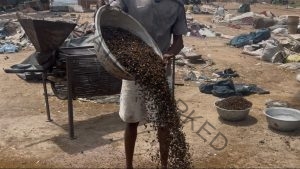
He then took me through the processing steps:
“After buying the nut, you crack it with a machine. Once cracked, you throw it out in a certain way, then you add water—just normal water—and mix it with clay. Many Ghanaians know what clay is.
The clay helps separate the shells from the nuts.
After separation, you keep the shells aside—either to burn or sell.
Then you dry the nuts, bag them, and prepare to extract the oil.”
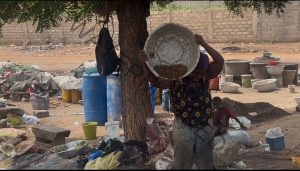
The oil’s uses are as diverse as they are practical:
“Some people use it on wood to prevent rot and insect damage.
Others use it in concrete work—when building gutters, for example, they apply the oil to wooden boards, so the concrete doesn’t stick.
You can also use the oil for cooking and frying.
But most importantly, we use the oil for making soap.
That’s the biggest part of the business.
People come and buy it—everyone needs soap—so it brings in steady income.”
Reflecting on his experience, Mr. Derrick smiled:
“There’s a lot of work involved. I can’t even list it all. But I can tell you this—there’s real money in it. Whatever you invest, you’ll get it back—and more. That’s the beauty of it.”
When asked about his journey, he stated:
“I’ve been doing this for about eight years now, without complaints.
It brings in good income.
I get everything I need from it, and I’m able to support myself and my family.”
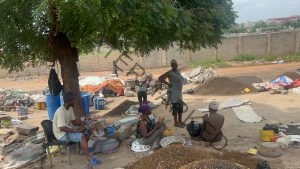
He concluded with heartfelt advice for Ghana’s youth:
“To the young people out there—especially those who say there’s no work—this is something you can do.
Even if it’s not this exact job, there are many other opportunities.
Don’t be lazy.
Too many youths today turn to scamming, but scamming won’t always pay.
You could scam for four years and still make nothing.
But if you do real work for four years, like I have, you’ll earn more than any scammer.
We’re here at Social Welfare, still doing the work.
Anyone interested can come for advice.
We’re always available and ready to help,” he said.
About The Author
