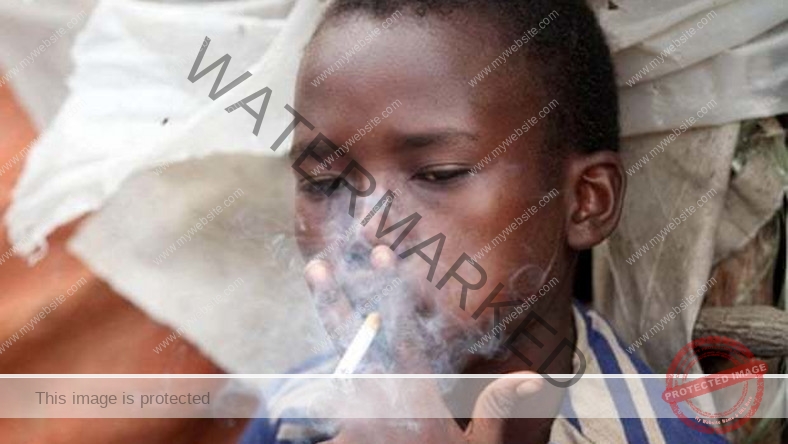
Ghana is currently facing a significant public health challenge due to the troubling increase in smoking addiction among minors.
This disturbing trend poses many health risks and social consequences that could have long-term implications for the well-being and development of the country.
Recent statistics from the Ghana Health Service (GHS) indicate that the number of minors engaging in smoking has reached critical levels.
Specifically, data reveals that 1 in 5 minors, or 21.4% of those aged 13 to 17, have experimented with tobacco at least once.
Even more concerning, 12.6% of minors in this age bracket smoke regularly, highlighting a growing dependency on tobacco products.

Additionally, the prevalence of smoking is notably higher in urban settings, where rates stand at 15.6%, compared to 9.5% in rural areas.
Despite existing laws designed to prevent smoking among individuals under 18, such as the Tobacco Control Regulations of 2016 (L.I. 2247) and the Public Health Act of 2012 (Act 851), minors continue to access and use tobacco products.
These regulations aim to restrict the sale of tobacco products to individuals under legal age, yet enforcement appears to be lacking.
The 2016 Multiple Indicator Cluster Survey (MICS) provides sobering statistics, revealing that 1% of adolescent girls and 6% of teenage boys aged 15 to 19 have used tobacco in some form.
Alarmingly, the Ministry of Gender, Children, and Social Protection (MoGCSP) reports that some Senior High School students are not only smoking cigarettes but are also using marijuana.

Approximately 90% of the cases treated at the Accra Psychiatric Hospital each year are related to drug abuse among young people.
Research in Ghana has documented various forms of smoking among children, including but not limited to shisha/waterpipe, cigarettes, and marijuana.
A study by Asante et al, “a group of people led by Asante,” found that 5.3% of young people aged 11 to 19 years reported using marijuana.
Moreover, research conducted by Logo et al., which examined nationally representative data on Junior High School students, discovered that 3.1% had experimented with shisha/waterpipe.
Meanwhile, findings from a study by Amonoo-Lartson and Pappoe among Senior High School students indicated that prevalence rates for smoking only cigarettes, only marijuana, and both substances were 5.3%, 0.6%, and 5.2%, respectively.
Several interrelated factors have been identified as contributing to the rising trend of smoking among minors in Ghana.
A primary issue is a lack of awareness; many minors do not fully understand the serious health risks associated with tobacco and may mistakenly view it as a desirable activity or “trend” to emulate.
Furthermore, peer pressure significantly impacts young people’s smoking habits, with friends and classmates often influencing their choices.
The easy accessibility of smoking products is another critical factor; cigarettes and shisha are readily available in various communities, often being sold by vendors who specifically target young people.
Additionally, socio-economic factors such as poverty and inadequate education can increase minors’ vulnerability, leading them to seek refuge in substances like tobacco and drugs.
Some young individuals recounted their personal experiences with smoking and drug use, illustrating the complex issues surrounding addiction.
One individual shared, “I started smoking when I was just twelve, and I am now nineteen years old. At first, I thought it would be good for my health. Now, I realize how misguided I was.”
Another expressed the emotional turmoil stemming from personal loss, stating, “My sister’s death pushed me into smoking. Whenever I think of her, I light up a joint to ease the pain.
It’s a coping mechanism; I want to forget about her. I consulted a doctor and found out I had asthma, but my friends suggested I try smoking weed to manage my symptoms.”
Another victim added his perspective: “I enjoy the euphoria that comes to my mind. My dad was well-to-do, but he abandoned me when I was in school. It made me sad and led me to join my friends in smoking.
I felt like it was the only thing that helped. Every day, I wake up and reach for it first, and weed has become my escape.”
Young individuals who smoke are at a heightened risk of developing serious respiratory issues, including chronic asthma, bronchitis, and related complications.
Moreover, smoking significantly increases the likelihood of cardiovascular diseases, including heart disease and stroke.
The association between smoking and various forms of cancer is well-documented, as it stands as a leading cause of preventable cancer deaths across the globe. Additionally, nicotine dependence can lead to lifelong addiction struggles, complicating their physical and mental health.
According to Dr. Dennis Bottey, “The problem with these drugs is the fact that it gets to the point that once it’s no more in your system, your body begins to have what we call withdrawal syndrome or withdrawal symptoms.”
He indicated that to combat the rising trend of smoking among minors in Ghana, the government and relevant stakeholders must collaborate on several fronts.
Integrating comprehensive tobacco control education into school curricula at all educational levels is essential to inform young people about the dangers of smoking and drug use.
Dr. Bottey stated, it is imperative that the legislature rigorously enforce existing laws prohibiting the sale of tobacco products to minors, ensuring that vendors comply with these regulations.
Community leaders and opinion shapers should also spearhead awareness campaigns and support groups to empower young people and their families to resist peer pressure and avoid substance use.
He emphasized that increased parental involvement is equally vital; parents should actively monitor their children’s activities and engage in open conversations about the consequences of smoking and drug use.
He warned that Ghana must take immediate, coordinated action to safeguard its youth from the dangers of smoking.
“This includes strengthening existing tobacco control laws, ensuring effective enforcement, and allocating adequate funding for anti-smoking campaigns.
Collaboration with educational institutions and community leaders is essential to create a united front against the escalating rates of adolescent smoking,” he added.
“Establishing accessible counseling and support services can provide young people with the tools they need to resist smoking and overcome addiction,” he concluded.
By Sampson Kumah Ifeetwube Elvis
About The Author
