
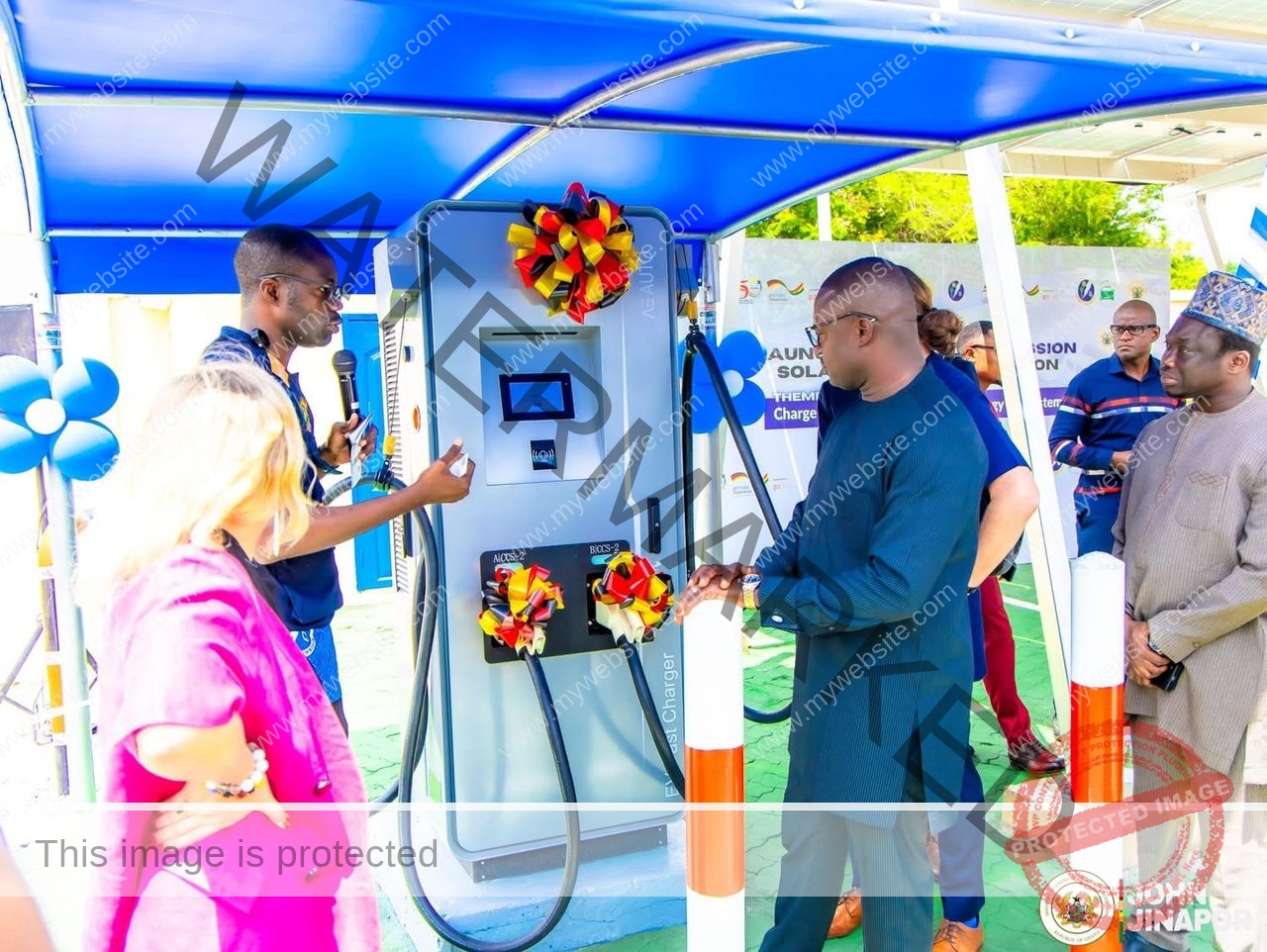
The Minister for Energy and Green Transition, Hon. John Abdulai Jinapor, has officially commissioned the country’s first-ever solar-powered Electric Vehicle (EV) charging station in Accra.
The initiative represents a significant leap forward in the government’s drive to promote sustainable transportation and reduce the nation’s carbon footprint.
A Turning Point in Ghana’s Energy and Transport Landscape
Speaking at the commissioning ceremony, the Minister hailed the facility as “a critical step in Ghana’s commitment to sustainable energy development and clean mobility.”
He emphasized that the project is more than just technological infrastructure—it signals a nationwide shift toward environmentally conscious policies and climate-resilient development.
“This station is more than just a facility; it is a statement of our shared intent to transform Ghana’s transportation and energy sectors in line with national and global sustainability objectives,” said Mr. Jinapor.
In Line with National and Global Goals
The EV charging station is a cornerstone of Ghana’s Energy Transition Framework, which aims to modernize the public transport system, reduce urban air pollution, and curb reliance on imported fossil fuels.
The initiative directly supports the United Nations Sustainable Development Goals, particularly SDG 7 (Affordable and Clean Energy) and SDG 13 (Climate Action).
“This initiative is a clear illustration of our resolve to meet climate obligations, improve air quality, and foster a resilient, low-carbon economy,” the Minister added.
Collaboration Behind the Breakthrough
The successful launch is the result of strategic collaboration between the Ministry of Energy and Green Transition, the Energy Commission, the Ministry of Transport, and other key stakeholders.
The pilot station is hosted by the Energy Commission, which has been leading the charge with its Drive Electric Initiative—a program designed to raise public awareness and support the growth of a viable EV market across Ghana.
Hon. Jinapor commended all partners involved, calling for even stronger collaboration to accelerate the rollout of clean transport infrastructure nationwide.
Economic and Environmental Benefits
Beyond its environmental impact, the Minister highlighted the economic value of adopting electric mobility.
With EVs offering lower operational and maintenance costs compared to internal combustion engine vehicles, the transition is expected to translate into long-term savings for transport operators and commuters alike.
“This shift will result in lower fares for passengers and reduced vulnerability to global fuel price shocks,” he noted.
The Road Ahead
Looking forward, Hon. Jinapor reaffirmed the Ministry’s commitment to scaling up Ghana’s EV infrastructure to ensure that the benefits of clean mobility are accessible to all.
“We recognize that infrastructure is the backbone of this transition.
The successful rollout of charging stations is key to realizing the full potential of electric vehicles in Ghana,” he stated.
The Minister ended his address with a strong call to action, urging government agencies, private sector investors, development partners, and citizens to work collectively in building a cleaner, more sustainable transport system.
“Let us work together to build out this infrastructure, incentivize adoption, and embed sustainability at the heart of our transport and energy systems.
Together, we can power the future—cleanly, efficiently, and sustainably,” he concluded.
Background:
This development comes at a time when countries around the globe are intensifying efforts to reduce greenhouse gas emissions and transition to green economies.
Ghana’s move positions it as a regional leader in clean transportation, paving the way for a more sustainable and energy-secure future for West Africa.
About The Author
