The New Patriotic Party (NPP) says government’s announced GH¢2.00 per litre reduction in diesel prices is only a partial and temporary cushion that does not reverse the overall increase in fuel prices over the past 18 months.
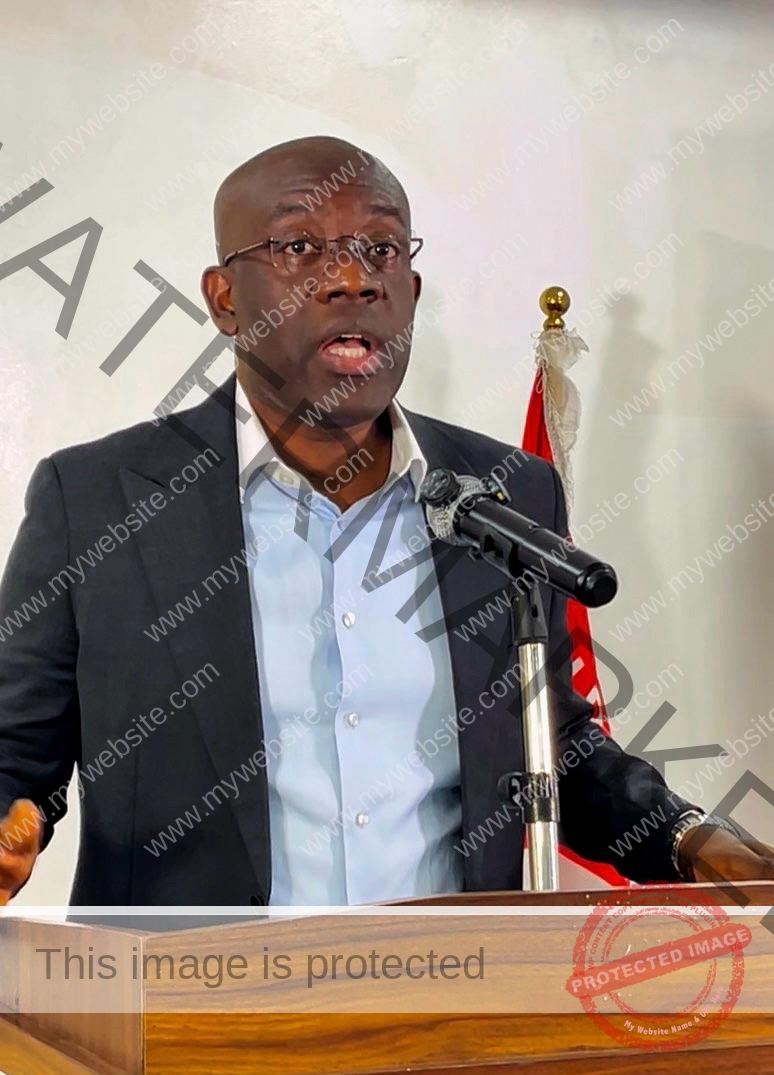
Addressing the press on the Energy Sector Levies Bill, 2026 and the World Bank’s downgrade of Ghana’s Energy Sector Recovery Program, Chairman of the NPP Policy Co-ordination Committee, Kojo Oppong Nkrumah (MP), said Ghanaians deserve to know how the relief is financed and who ultimately pays for it.
What the GH¢2.00 really means
Mr. Oppong Nkrumah said on August 3, 2026, GOIL posted petrol at GH¢15.99 per litre and diesel at GH¢19.26 per litre. In January 2025, petrol sold at around GH¢15.13 and diesel at GH¢15.49.
Over the same period, the cedi strengthened from about GH¢14.70 to about GH¢11.67 to the dollar, yet petrol is 5.7% higher than in January 2025 and diesel is 24.3% higher.
“Even if the full GH¢2.00 reduction is passed through, diesel would still stand about 11.4% above its January 2025 level,” he said. “So let us be accurate about what this intervention is. It cushions part of the increase that has already happened. It does not reverse it.”
The midnight levy
The NPP argued the relief cannot be assessed in isolation from the Energy Sector Levies Bill, 2025, passed at 11:10pm on June 3, 2025, under a certificate of urgency, imposing an additional GH¢1.00 on every litre of petroleum products.[Amendment]
He said NPP MPs opposed it and walked out, while the Finance Minister assured that the strong cedi would neutralize its impact and that projected GH¢5.7 billion in annual proceeds would retire energy sector debt and end power outages. The levy took effect on July 16, 2025 and remains in force.
“Consider the plain arithmetic. A consumer who has paid GH¢1.00 extra on every litre for more than a year now receives, at best, GH¢2.00 back on diesel for a single month, and nothing at all on petrol. This is not generosity. It is a partial, temporary return of money already taken at midnight,” he said.
Cost and who pays
Government describes the intervention as a reduction in regulatory margin rather than a subsidy, but the NPP said foregone revenue is still a cost.
Based on an earlier diesel programme which cost GH¢800 million over two months, the party estimates the one-month measure will cost about GH¢400 million in foregone revenue. Adding earlier petrol relief of GH¢99.4 million, cumulative stated 2026 interventions amount to about GH¢1.3 billion.
“That GH¢400 million in a single month is money that cannot simultaneously service energy sector debt, maintain roads or reduce the deficit. If unbudgeted, it widens the financing gap. If margins owed to industry are deferred, it creates arrears. There is no free relief,” Mr. Oppong Nkrumah stressed.
Fuel oil levy hike and refund questions
On Friday July 31, Parliament passed the Energy Sector Levies Bill, 2026, raising the Energy Sector Shortfall and Debt Repayment Levy on fuel oil by GH¢1.69 per litre, from GH¢0.24 to GH¢1.93, and extending the Road Fund Levy to fuel oil.[Amendment]
Government says it closes a misclassification loophole that cost an estimated $25 million between January and June 2026, with refunds to eligible industrial users within 14 days.
Mr. Oppong Nkrumah said while the anti-evasion objective is legitimate, government has not published who will administer refunds, who qualifies, how refunds will be financed, or what happens to rejected claims.
“Companies must pay upfront and wait. That is a working capital burden on industry, and industry will pass it on,” he said.
He asked: “Where a company embeds the upfront levy in its prices and is later refunded, the company recovers its money, but the consumer who bore the passed-on cost does not. Will costs previously transferred to consumers be refunded to them, and through what mechanism?”
World Bank downgrade
The NPP said the interventions are happening as the World Bank in June 2026 downgraded Ghana’s Energy Sector Recovery Program from Moderately Satisfactory to Unsatisfactory.
Combined losses of ECG and NEDCo have risen from $1.257 billion in 2022 to $1.517 billion by May 2026, against a target of $525 million for 2027, due to stalled reforms, delayed procurement and weak governance.
“Ghana cannot solve a debt and arrears crisis by creating new hidden revenue losses,” he said.
Five questions for government
The party posed five questions:
1. Which specific margins, levies or taxes are being reduced to finance the GH¢2.00 diesel relief, and what is the total revenue loss?
2. Has this been provided for in the 2026 budget, and what expenditure will be cut to offset it?
3. What mechanism will ensure transport fares and prices of essential goods actually reflect the relief?
4. Will the GH¢1.00 per litre levy remain at its full rate during the relief period, and will costs previously transferred to consumers be refunded?
5. What objective trigger determines whether the intervention ends, continues or is replaced?
NPP’s proposals
The NPP said it supports genuine protection for citizens but called for fiscal discipline. It proposed that government:
– Publish the full petroleum price build-up and financing source before implementation;
– Cap the intervention at a disclosed fiscal amount and report weekly on litres subsidized and revenue foregone;
– Prioritize targeted relief for public transport, food distribution, agriculture and fishing rather than indefinite universal subsidy;
– Apply automatic sunset clauses with objective crude price and exchange rate triggers; and
– Pay industry claims promptly to avoid new arrears.
Four fronts of action
Mr. Oppong Nkrumah said the GH¢2.00 reduction may ease pressure for a month, but “a one-month discount on diesel, financed opaquely, alongside a permanent levy taken at midnight and a downgraded energy sector, is not an economic strategy.”
He said the NPP will act on four fronts: filing urgent questions in Parliament on financing and refunds; tracking and publishing monthly collections of energy levies, refunds paid and pump price movements; engaging transport unions, industry and consumer groups; and proposing a transparent, rules-based shock-response framework with published build-ups, fiscal caps, targeted relief and automatic sunset triggers.
“The question we will keep asking, with the Government’s own figures in hand, is a simple one: stability for whom? Until Ghanaians get answers, we will not relent,” he said.
By Sampson Kumah Ifeetwube Elvis
About The Author
