Ten years after one of Ghana’s deadliest urban tragedies, the Accra Metropolitan Assembly (AMA), in collaboration with youth-led environmental groups, is marking the 10th anniversary of the June 3rd Twin Disaster with a citywide climate summit and sanitation campaign aimed at spotlighting the urgent need for climate action and urban resilience.
The initiative, officially announced in a statement signed by the Head of Public Affairs on behalf of the Mayor of Accra, Mr. Michael Kpakpo Allotey, will see city leaders, young climate advocates, and local stakeholders converge at the Omanye Aba Hall of the AMA for a commemorative summit themed: “June 3rd, A Stern Reminder of Climate Inaction.”
The summit is scheduled for Tuesday, June 3, 2025, at 10:00 a.m.
Background: A Decade After the Twin Disaster
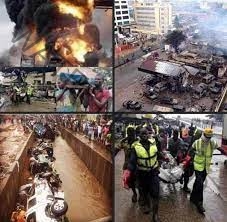
The June 3rd Twin Disaster of 2015, which claimed over 150 lives due to a combination of urban flooding and a deadly gas explosion at the GOIL filling station near the Kwame Nkrumah Circle, remains a painful reminder of the consequences of poor urban planning, choked drains, inadequate infrastructure, and unregulated development in flood-prone areas.
The disaster exposed systemic weaknesses in Accra’s flood preparedness, triggering national outrage and calls for drastic reforms in environmental governance and city management.
A Shift Toward Action: Summit and Sanitation Campaign
This year’s commemoration, according to the AMA, seeks not just to remember the victims but to galvanize concrete climate action and foster a culture of environmental responsibility across all sectors of society.
The summit is being organized in partnership with Youth Climate Advocates under Phase II of the Youth Climate Action Fund (YCAF)—a programme designed to empower young people to spearhead climate solutions in their communities.
“Beyond remembrance, this year’s June 3rd anniversary presents a vital opportunity to recommit to concrete climate actions,” the statement emphasized.
As part of the activities, a citywide clean-up exercise will be held, focusing on desilting drains, clearing plastic waste, and engaging schools and markets.
The campaign will be led by YCAF micro-grantees and aims to strengthen environmental consciousness at the grassroots level.
Ongoing Interventions to Combat Urban Flooding
In line with Accra’s long-term climate adaptation and flood mitigation strategy, the AMA outlined several ongoing interventions, including:
Routine maintenance of tertiary and secondary drains in flood-prone sub-metropolitan areas like Okaikoi South, Ablekuma South, and Ashiedu Keteke.
Targeted flood-control interventions in areas such as Korle Woko Electoral Area and London Market.
Collaborative efforts with the Hydrological Services Authority to dredge the Odaw Channel, Accra’s main stormwater outlet.
Leverage of the Greater Accra Resilient and Integrated Development (GARID) Project to carry out large-scale desilting of major drainage basins.
Planned expansion of critical drainage systems from 0.6 meters to 0.9 meters to accommodate higher volumes of stormwater runoff caused by rapid urbanization.
Call for Collective Action
The Assembly concluded its statement with a call to action, urging residents, youth groups, and local stakeholders to participate in both the summit and clean-up exercises.
“We must all take collective responsibility for the safety and future of our city. The memory of June 3rd must serve not just as a reminder of what went wrong, but as a catalyst for what must be done right,” the statement read.
About The Author
