
Food safety must be a national concern because “we all consume food,” says Yakubu Adams, Consultant Toxicologist for Forensic Investigation for National Development Ghana (FIND-GH).
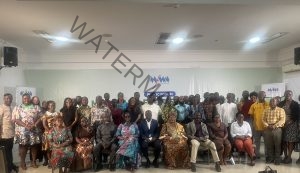
Speaking at the Media and Food Safety Forum in Accra on Thurday, November 20, aimed at increasing public awareness of agrochemical use, organized by the Media Foundation for West Africa (MWFA), Mr. Adams stressed the need to pay closer attention to the origins of our food.
He explained that crops can be contaminated with agrochemicals or mercury from illegal mining (galamsey) activities—pollutants that pose significant health threats.
Studies have shown that exposure to these chemicals can contribute to non-communicable diseases such as Parkinson’s disease, diabetes, and hypertension.
These conditions, he noted, can be fatal.
He therefore urged the government to prioritize prevention over treatment by strengthening regulatory oversight.
According to Mr. Adams, the first step is to empower key agencies such as the Environmental Protection Agency (EPA) and the Ghana Standards Authority’s Food and Drugs Authority (FDA).
He emphasized that these institutions need more personnel and better resources to effectively regulate Ghana’s food supply and protect public health.
“If we fail to act now, we may face dire consequences,” he warned.
Adding that prevention is both safer and more cost-effective than seeking cures after harm has occurred.
Ghana already has a comprehensive legal framework for chemical safety.
The EPA is a signatory to international agreements including the Rotterdam Convention, the Basel Convention, and the Stockholm Convention on Persistent Organic Pollutants, as well as UN protocols on pesticide distribution and use.
However, Adams argued that enforcement remains weak because the responsible agencies are understaffed. He recommended recruiting more field officers to ensure compliance.
Addressing the impact of illegal mining, he explained that mercury used in galamsey operations evaporates into the atmosphere and can travel up to 500 kilometers before settling.
Residents in affected areas are exposed to compromised air quality as a result.
Once the vaporized mercury returns to the soil, microorganisms convert it into methylmercury—a more toxic form that is easily absorbed by crops, especially monocotyledonous plants such as maize, cassava, and sugarcane.
This means that individuals consuming produce from galamsey-prone areas may be ingesting harmful levels of mercury.
Research by Pure Earth, the EPA, and other institutions has confirmed elevated mercury levels in Ghanaian crops.
Combined with agrochemical residues, this creates what Mr. Adams described as a “chemical cocktail” in the nation’s food supply.
He concluded with a call for urgent action: strengthening regulatory bodies is essential if Ghana is to ensure that the food on its tables is safe, healthy, and free from harmful contaminants.
By Sampson Kumah Ifeetwube Elvis
About The Author
