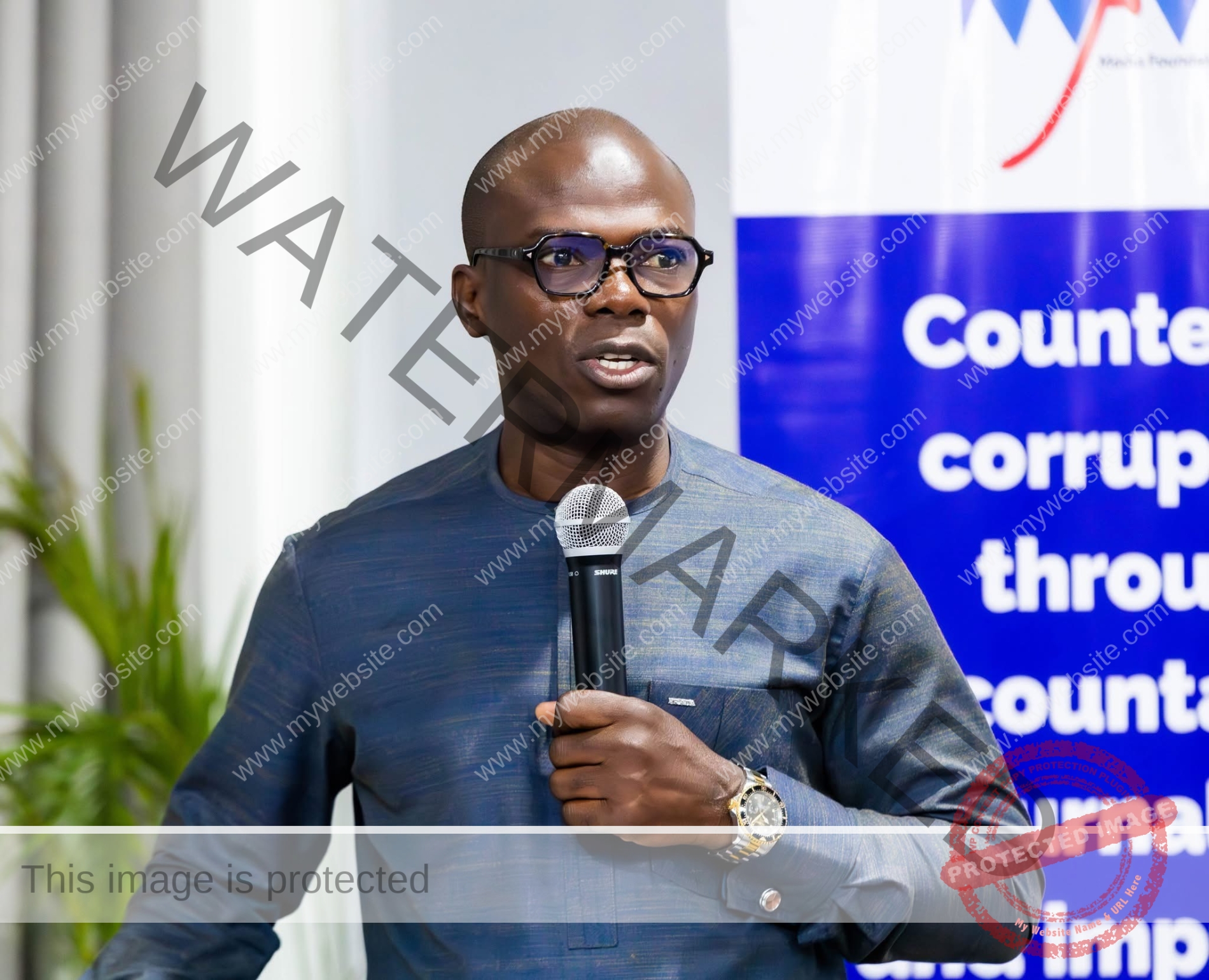
Sulemana Braimah, Executive Director of the Media Foundation for West Africa (MFWA), has called for a fairer and more consistent application of Ghana’s false news laws, stressing the need for improved cooperation between the media and security agencies.
He made the remarks at the Media-Security Dialogue held in Accra.
Mr. Braimah noted that he has participated in similar engagements across the region—including Liberia, Sierra Leone, Guinea-Bissau, Nigeria, and Mali—and that Ghana stands out for the relative professionalism of its security agencies, particularly the police.
The difference in engagement style, tone, and overall conduct, he said, is striking.
He urged stakeholders to acknowledge this progress and build on the gains Ghana has made in governance and democratic practice.
Despite Ghana’s comparative advantage, Braimah stressed that there remains significant room for improvement.
He described the dialogue as essential for addressing emerging concerns within both the security and media sectors.
While the media landscape has expanded, he noted persistent challenges, especially the difficulty in distinguishing professional journalists from other content creators such as bloggers.
Mr. Braimah expressed concern about how the law on publishing false news is being applied.
He recalled raising similar issues during the former president Akufo-Addo’s administration, including writing directly to the president over what he viewed as misuse of the law under the Mills-Mahama era.
He cited three past cases: one involving Nana Dakwa about the fire incident at former President Rawlings’s residence; another concerning allegations against real estate developers made by Ato Kwamena Dadzi; and a third involving Amina Muhammad, who reported being accosted by armed robbers.
According to Mr. Braimah, the problematic nature of the false news law—especially its vague provisions on threats to public peace—has long been evident.
His concern has grown with what he sees as a shifting pattern in arrests, where individuals are detained primarily because someone has lodged a complaint.
He referenced a recent case in which a person was arrested for allegedly implicating three ministers in illegal mining (galamsey).
He questioned the fairness of this approach, pointing out that ministers and Members of Parliament have also made false statements on social media without facing similar consequences.
If someone spreads falsehoods about him, he argued, the appropriate remedy should include seeking a retraction, an apology, or pursuing defamation through the courts.
Mr. Braimah concluded by noting that many defamation cases are currently before the courts, filed by individuals who believe their reputations have been damaged by media reports—further underscoring the need for clearer, fairer, and more consistent enforcement of media-related laws.
By Sampson Kumah Ifeetwube Elvis
About The Author
