
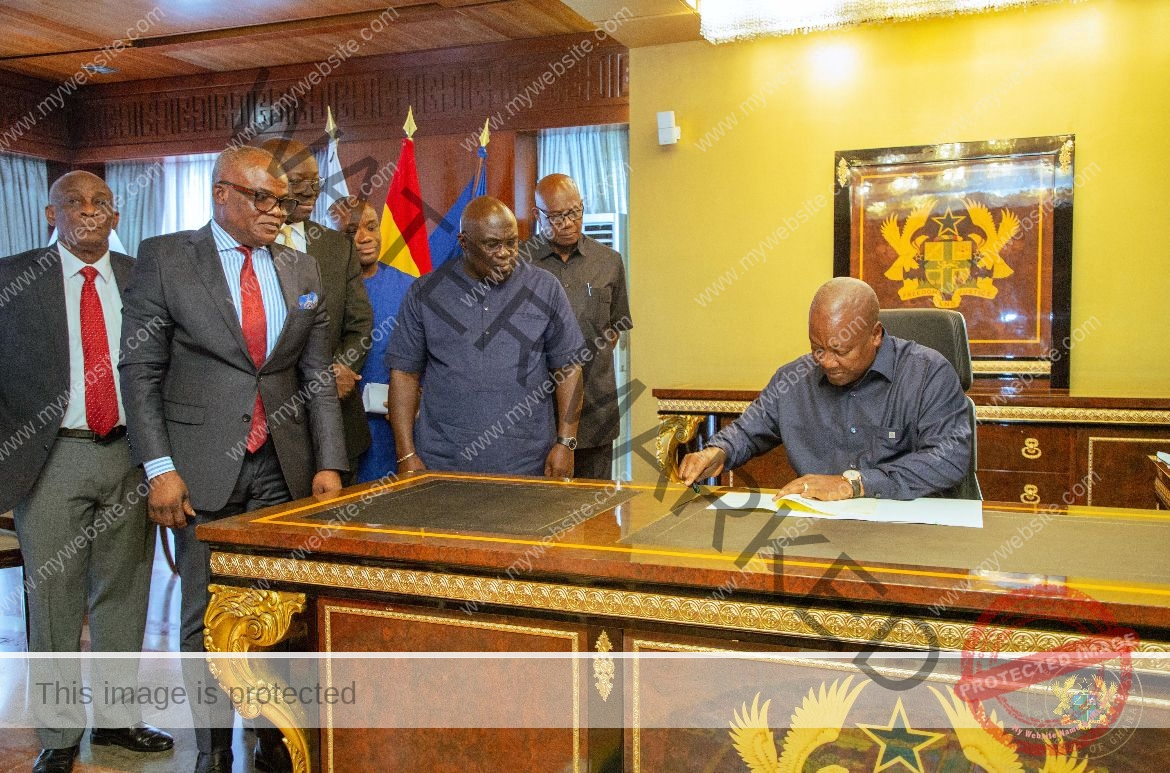
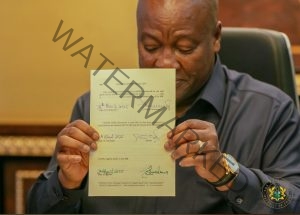
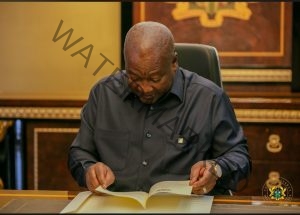
President John Dramani Mahama has officially signed into law amendments that abolish three controversial taxes—the Betting Tax, the Electronic Levy (E-Levy), and the Emissions Tax.
This major legislative change, which comes after Parliament passed the amendments earlier this week, is seen as a crucial part of Mr. Mahama’s pledge to ease the financial burden on businesses and individuals, particularly those in the gaming, digital, and environmental sectors.
The announcement was made on Wednesday, April 2, at the Jubilee House in Accra.
The E-Levy was one of the most contentious policies during the previous government’s tenure.

Introduced in 2022, the E-Levy imposed a charge on electronic financial transactions, including mobile money transfers, bank transfers, and payments through digital platforms.
Initially designed as a way to increase government revenue, the levy faced widespread backlash.
Many Ghanaians, especially small business owners, felt that the tax burdened their day-to-day financial activities and made digital transactions, which are increasingly used in everyday commerce, more expensive.
The government had projected that the levy would raise significant funds, but the public’s resistance and the negative impact on digital commerce led to calls for its repeal.
Mr. Mahama’s campaign pledge to scrap the E-Levy resonated with a large section of the population, making it a key factor in his victory during the election.
Now, with the law abolished, mobile money users and small business owners are expected to see relief, as the repeal removes the financial strain previously imposed on electronic transactions.
Experts predict that this move could result in an increase in mobile money transactions, benefiting both individual users and businesses that rely on mobile payments for day-to-day operations.
The Betting Tax, another key aspect of the new law, has also been abolished. Introduced to regulate the rapidly growing gaming and betting industry in Ghana, the tax imposed a significant financial burden on businesses operating in the sector.
The gaming industry, including sports betting and lottery operators, has long opposed the tax, arguing that it stifled growth and reduced profitability.
The repeal of this tax is seen as a move to revitalize the sector, making it more attractive to investors and enabling operators to reinvest in their businesses and create more jobs.
The gaming sector has been one of the fastest-growing industries in Ghana in recent years, and many industry players have welcomed Mr. Mahama’s decision to remove the tax, believing it will stimulate both local and international investments in the sector.
The Emissions Tax was another controversial policy that was introduced as a means of addressing environmental concerns by taxing companies based on their carbon emissions.
However, businesses, particularly in the energy and manufacturing sectors, argued that the tax was too burdensome, particularly during challenging economic times.
Critics also noted that it disproportionately affected companies that were already investing in cleaner technologies.
The removal of the Emissions Tax has been hailed as a step towards supporting businesses, especially those working towards sustainable practices, without the added financial strain.
While environmental groups have raised concerns about the long-term impact of the repeal, Mr. Mahama has assured the public that the government will continue to prioritize environmental sustainability through alternative policies, including initiatives focused on promoting clean energy and reducing carbon footprints.
President Mahama’s decision to sign these bills into law has been met with widespread support, particularly from the business community, digital money users, and the gaming industry.
The financial relief expected from the abolition of these taxes is likely to have a positive effect on the economy, stimulating spending and investment.
Additionally, the decision to remove the E-Levy is expected to strengthen Ghana’s digital economy, encouraging more people to use digital payment systems and mobile money services.
The removal of the Betting Tax is likely to provide a boost to the local gaming industry, leading to job creation and increased government revenue from other regulatory avenues.
For Mr. Mahama, this move represents a significant victory, fulfilling a key campaign promise and demonstrating his commitment to economic relief and growth.
By responding directly to public concerns and taking action to alleviate financial burdens, Mr. Mahama is positioning himself as a leader who listens to the people’s needs and is committed to implementing practical policies that foster economic development.
President Mahama has indicated that alternative revenue streams, such as strengthening tax collection systems and expanding investment in digital and green technologies, will be pursued to ensure the country’s fiscal stability.
About The Author
