
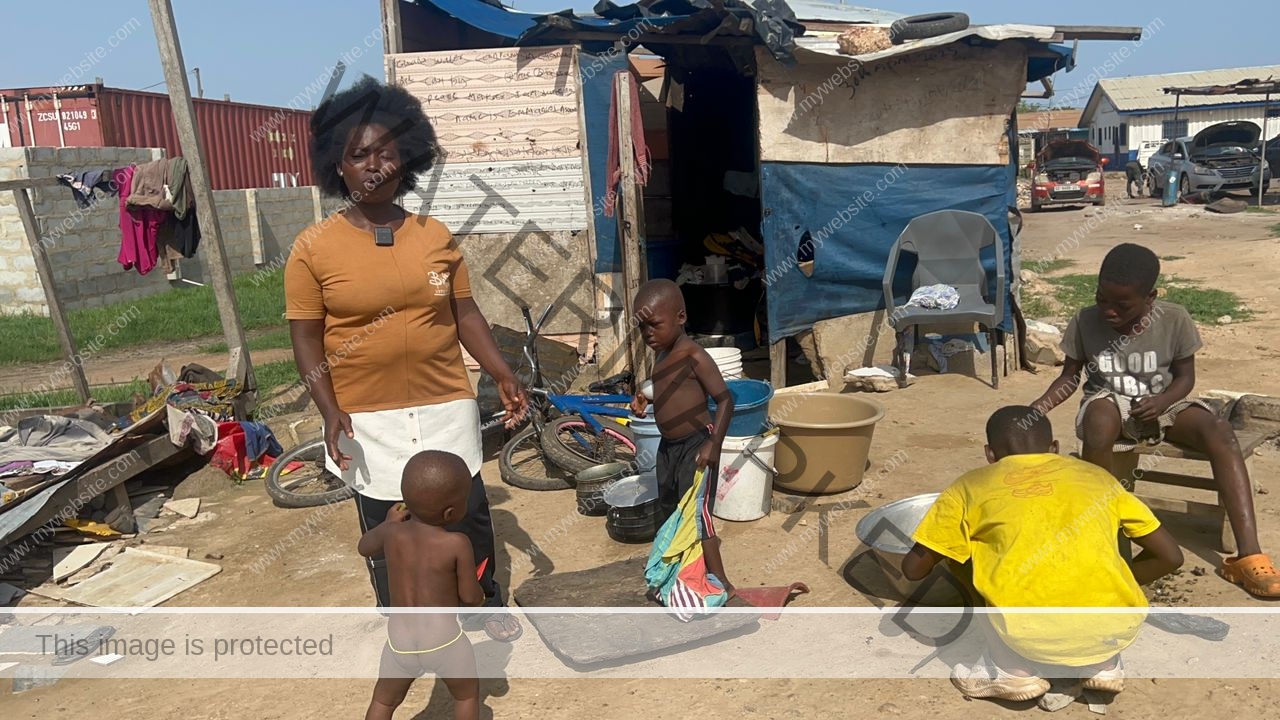
In the overcrowded corners of Madina New Market in Accra, where makeshift shelters rise from earth and desperation, a 35-year-old abandoned unemployed mother, Afua Gyamaa watches dark clouds roll in with dread, not just for the weather, but for what it means for her five children.
Her home—if it can be called that—is a fragile wooden structure with gaping holes and no roof.
As rain pours through the open sky, it drenches their bedding, food supplies, and the few belongings they own. On nights like these, sleep is not just scarce—it’s impossible.
“When it rains, sleep becomes a luxury we can’t afford,” Afua says quietly, her voice worn but unwavering.
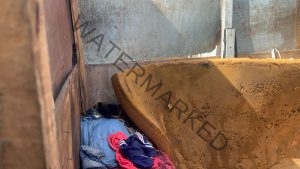
For three years, Afua and her children have endured these unbearable living conditions—battling not only the elements but the suffocating grip of poverty.
Every downpour is a reminder that their shelter is temporary.
Every morning, they face the same uncertainty: Will there be food? Will they be safe? Will they survive another day?
Afua’s struggles began when she lost her job—her only source of income.
Suddenly abandoned by the father of her children and with no social safety net, she was forced into the harsh reality of single motherhood without support.
Despite her efforts to find work, she has been unable to secure stable employment.
The little she earns from washing clothes and doing odd jobs barely sustains them.
Currently, only two of her five children are enrolled in school.
The others remain at home—not by choice, but by circumstance. School fees, uniforms, and meals are simply out of reach.

“Sometimes, we manage just one meal a day,” Afua admits, eyes downcast. “Even that is never guaranteed.”
Their story is heartbreakingly familiar across many underserved urban slums—where poverty, unemployment, and neglect are everyday realities.
These are families fighting silently in the shadows, families who need more than just sympathy. They need action.
Afua’s greatest fear is not the hunger or the cold—it’s that her children may inherit a life of hardship with no opportunity to escape.
Her dream is modest but profound: a safe place to live, a stable income, and a chance for her children to get an education and build a better future.
“We don’t want much,” she says. “Just a roof. A place we can call home. A chance to live with dignity.”
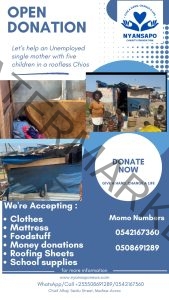
A Call to Action
Afua Gyamaa is making a heartfelt appeal to the general public, benevolent individuals, and charitable organizations.
She is seeking assistance—be it in the form of:
-
Safe housing or rental support
-
Educational sponsorships for her children
-
Job opportunities or vocational training
-
Basic necessities such as food, mattresses, and clothing
Even the smallest act of kindness can have a life-changing impact.
With your help, Afua can rebuild her life and ensure her children don’t remain trapped in this cycle of suffering.
Let us not wait for the next rainstorm to wash away another night of hope.
Let us act now—because every child deserves more than survival. Every mother deserves the chance to give her children a future.
About The Author
