
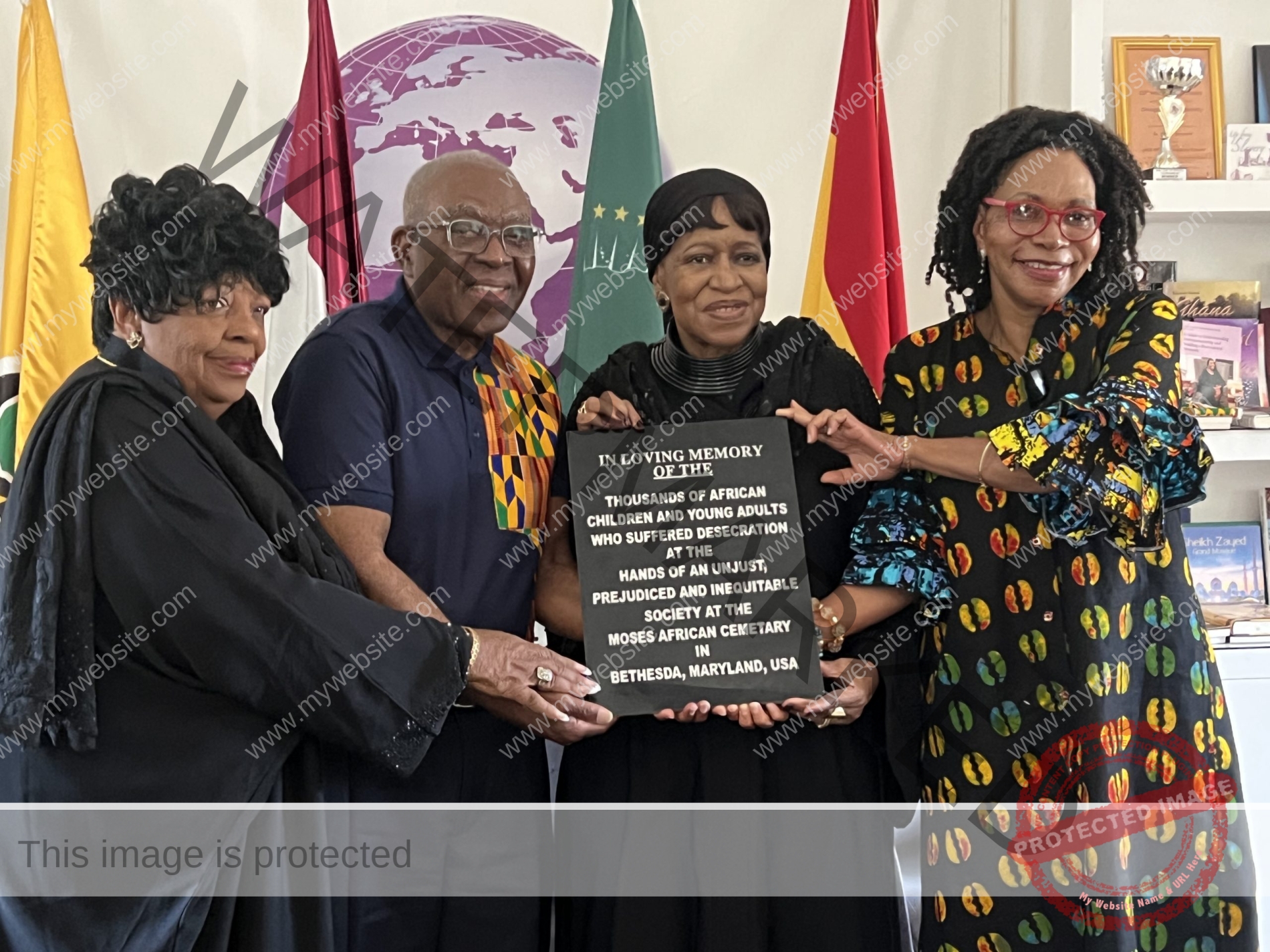
In a powerful display of solidarity and remembrance, the Diaspora African Forum (DAF), in collaboration with the Bethesda African Cemetery Coalition (BAC), has held a solemn commemoration in Ghana to honor the victims of the transatlantic slave trade.
The ceremony was prompted by the recent desecration of Moses African Cemetery in Bethesda, Maryland—an incident that has sparked widespread outrage and renewed demands for justice.
The cemetery, where the remains of hundreds of enslaved Africans rest, was disturbed during excavation for a storage facility, prompting protests in the United States and international condemnation.
The Ghana event brought together activists, community leaders, and descendants of enslaved Africans to acknowledge the humanity of the victims and to highlight the enduring legacy of the slave trade.
In the United States, Dr. Marsha Coleman-Adebayo, President of the Bethesda African Cemetery Coalition, condemned the desecration, calling it a painful reminder of the ongoing struggle for justice and equality.
“The desecration of Moses African Cemetery is a stark reminder of the ongoing struggle for justice and equality,” Coleman-Adebayo said.
“We demand justice for our ancestors and a place that we can truly call home.”
The parallel events—commemoration in Ghana and protests in the U.S.—underscore the broader, continuing fight for recognition, reparations, and proper memorialization for victims of the transatlantic slave trade.
Advocates are calling on the international community to acknowledge historical atrocities and ensure that the remains of the enslaved are treated with dignity and respect.
Reverend Shagun Adebayo emphasized that the significance of the Ghana commemoration lies in the symbolic act of returning home.
“These little girls are ancestors we have long been fighting for, and we are finally giving them the honor they deserve,” he said. “They are receiving their dignity back in their motherland, and that, in itself, is profound.”
He further highlighted the importance of recognizing a 105-year-old church built by ancestors, now represented on the Sankofa Wall.
“In doing this, we are honoring them, and I am certain their spirits and souls are glad to be home, where they feel valued and remembered. That, to me, is the true significance of this moment.”
Reverend Adebayo reminded attendees that the ancestors being honored were African children stolen from their homeland and forced across the ocean, many of whom endured horrific violence—torture, degradation, abuse, and rape—yet some survived.
“Because they survived, she is here today. Because of them, I am able to make my own sojourn in the Americas.
They are our ancestors. They are our ancestors,” he concluded.
By Sampson Kumah Ifeetwube Elvis
About The Author
