
July 28, 2026 7:29 am
Breaking
Joint Monitoring Exercise Confirms Steady Progress of GSCSP Projects in Oti and Volta The Ministry, in collaboration with the World Bank, has commenced a Joint Monitoring Exercise under the Ghana Secondary Cities Support Programme (GSCSP) to assess the implementation of projects across beneficiary Metropolitan, Municipal and District Assemblies (MMDAs). The monitoring exercise forms part of efforts to ensure that projects under the Programme, which is expected to conclude end of year, are progressing according to schedule. The exercise seeks to verify that contractors are actively on site, assess the utilisation of funds already disbursed, monitor compliance with environmental and social safeguard requirements, and identify challenges that may require timely intervention. It will also inform the processing of subsequent disbursements to facilitate the completion of projects before the Programme’s closure. The team began the exercise in the Krachi East Municipality at Dambai in the Oti Region, where three ongoing projects were inspected. Overall, the projects were found to be progressing steadily, with contractors actively executing works. During the inspection, the team observed minor erosion around some local drains and advised the contractor to undertake the necessary corrective measures to prevent further deterioration and protect the integrity of the infrastructure. The team also assessed compliance with environmental, health and safety safeguards and observed that workers were appropriately equipped with the required Personal Protective Equipment (PPE) and were adhering to the prescribed safety standards. Contractors were encouraged to maintain these standards while expediting works to ensure timely completion.The team further inspected a linear infrastructure project, where work was also progressing satisfactorily. However, traders operating along sections of the project corridor were identified as a potential safety concern. The Assembly was advised to work with the affected traders to relocate their activities away from the construction zone to minimise risks and facilitate smooth project implementation. The monitoring team later visited the Hohoe Municipality in the Volta Region, where six GSCSP projects were inspected. Although some contractors had completed work for the day before the team’s arrival, the quality and progress of works observed indicated satisfactory implementation and compliance with safeguard requirements. One recommendation made during the visit was the installation of clearly visible emergency contact information at project sites to enhance emergency preparedness and improve public safety. Contractors were also encouraged to continue observing all safeguard protocols throughout the remaining stages of implementation. Overall, the monitoring exercise found that the projects visited in both the Oti and Volta Regions are progressing steadily, with only minor issues requiring corrective action. The Ministry and the World Bank remain committed to working closely with the beneficiary Assemblies and contractors to address these issues promptly and ensure the successful completion of all GSCSP projects before the Programme concludes. The joint monitoring exercise continues in the Adaklu District, where the team will assess additional projects to ensure they remain on track for completion within the Programme’s implementation period.

Our Oceans at a Crossroads: Protecting Blue Ecosystems for Life, Livelihoods, and Climate Resilience

The ocean sustains life on Earth. It provides food for billions of people, generates much of the oxygen we breathe, supports livelihoods and cultures, and plays a central role in regulating the global climate. Yet today, this vital life-support system faces unprecedented threats.

Overfishing, climate change, pollution, and habitat destruction are pushing marine ecosystems to the brink. When the ocean is in crisis, humanity is in crisis too. Protecting the ocean is therefore not merely an environmental concern—it is essential to safeguarding human health, economic stability, and the future of life on the planet.

The combined effects of climate change, biodiversity loss, and pollution—often referred to as the triple planetary crisis are rapidly degrading blue ecosystems worldwide. Coral reefs, mangroves, seagrasses, estuaries, and the open ocean are increasingly damaged, with devastating consequences for marine species, coastal livelihoods, and human well-being.

Coastal regions face particularly severe pressures. These areas are home to nearly 40 percent of the global population and 12 of the world’s 15 largest cities. 

While coastlines offer access to water, trade routes, tourism, and economic opportunity, they are also under intense strain from urbanization, industrial activity, tourism, and unsustainable resource use. As a result, only about 15 percent of the world’s coastlines remain in a near-natural state.

Blue ecosystems span the entire water continuum—from rivers and wetlands to coastal zones and the open ocean—and are fundamental to communities, jobs, food security, and the global economy. 

They also play a critical role in climate resilience. The ocean acts as a vast carbon and heat sink, absorbing more than 90 percent of excess heat generated by human activities and approximately 30 percent of human-induced carbon dioxide emissions.

READ ALSO  Countdown to Contact? Scientists Warn of Possible Extraterrestrial Encounter in November 2025

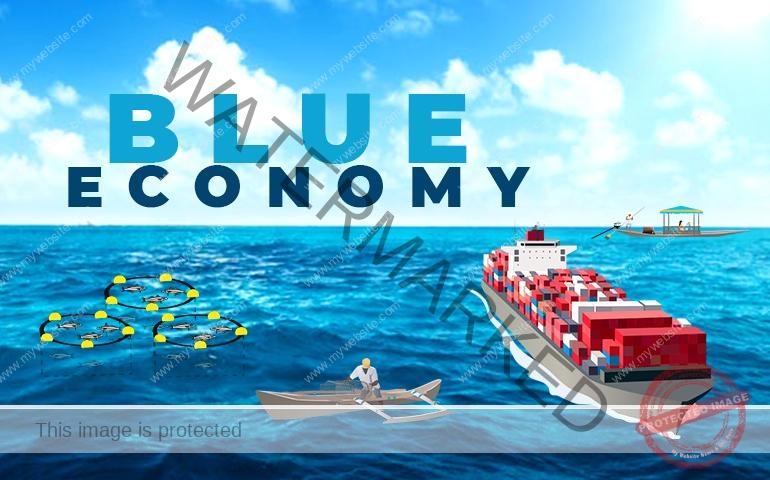
Economically, the ocean is a global powerhouse. The blue economy generates more than $1.5 trillion annually, supports millions of jobs, and sustains diverse cultures and coastal societies across the world. However, these benefits depend entirely on healthy, functioning marine ecosystems.

Protecting and restoring blue ecosystems is therefore central to achieving the Global Biodiversity Framework and the Sustainable Development Goals. Healthy oceans safeguard economic assets, strengthen biodiversity, and enhance resilience for both people and the planet.

The future of humanity is inseparable from the future of the ocean—and the time to act is now.


By Sampson Kumah Ifeetwube Elvis


About The Author

By Sampson Kumah Ifeetwube Elvis

Investigative Journalist & Storyteller News Reporter & Media Professional Journalist | Uncovering the Truth Media Specialist | News, Features & Analysis

Leave a Reply

Your email address will not be published. Required fields are marked *

Trending

Joint Monitoring Exercise Confirms Steady Progress of GSCSP Projects in Oti and Volta The Ministry, in collaboration with the World Bank, has commenced a Joint Monitoring Exercise under the Ghana Secondary Cities Support Programme (GSCSP) to assess the implementation of projects across beneficiary Metropolitan, Municipal and District Assemblies (MMDAs). The monitoring exercise forms part of efforts to ensure that projects under the Programme, which is expected to conclude end of year, are progressing according to schedule. The exercise seeks to verify that contractors are actively on site, assess the utilisation of funds already disbursed, monitor compliance with environmental and social safeguard requirements, and identify challenges that may require timely intervention. It will also inform the processing of subsequent disbursements to facilitate the completion of projects before the Programme’s closure. The team began the exercise in the Krachi East Municipality at Dambai in the Oti Region, where three ongoing projects were inspected. Overall, the projects were found to be progressing steadily, with contractors actively executing works. During the inspection, the team observed minor erosion around some local drains and advised the contractor to undertake the necessary corrective measures to prevent further deterioration and protect the integrity of the infrastructure. The team also assessed compliance with environmental, health and safety safeguards and observed that workers were appropriately equipped with the required Personal Protective Equipment (PPE) and were adhering to the prescribed safety standards. Contractors were encouraged to maintain these standards while expediting works to ensure timely completion.The team further inspected a linear infrastructure project, where work was also progressing satisfactorily. However, traders operating along sections of the project corridor were identified as a potential safety concern. The Assembly was advised to work with the affected traders to relocate their activities away from the construction zone to minimise risks and facilitate smooth project implementation. The monitoring team later visited the Hohoe Municipality in the Volta Region, where six GSCSP projects were inspected. Although some contractors had completed work for the day before the team’s arrival, the quality and progress of works observed indicated satisfactory implementation and compliance with safeguard requirements. One recommendation made during the visit was the installation of clearly visible emergency contact information at project sites to enhance emergency preparedness and improve public safety. Contractors were also encouraged to continue observing all safeguard protocols throughout the remaining stages of implementation. Overall, the monitoring exercise found that the projects visited in both the Oti and Volta Regions are progressing steadily, with only minor issues requiring corrective action. The Ministry and the World Bank remain committed to working closely with the beneficiary Assemblies and contractors to address these issues promptly and ensure the successful completion of all GSCSP projects before the Programme concludes. The joint monitoring exercise continues in the Adaklu District, where the team will assess additional projects to ensure they remain on track for completion within the Programme’s implementation period.